
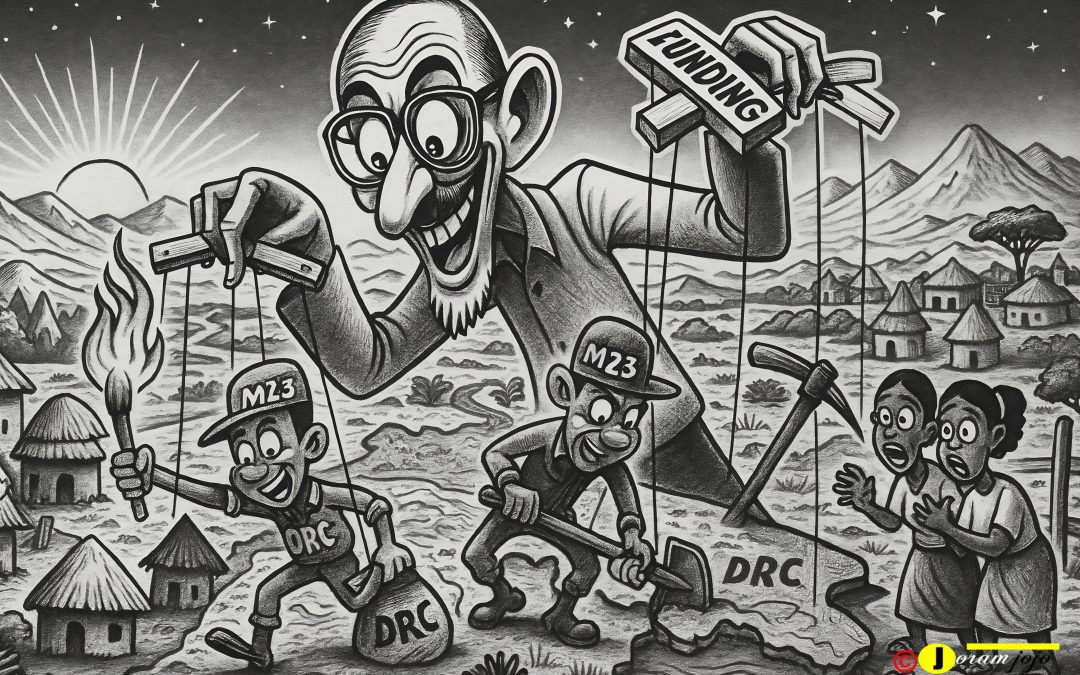
A Crisis Manufactured in Kigali: Decoding Rwanda’s Strategic Objectives in the DRC
In the heart of Africa lies a land of unimaginable wealth and profound suffering: the Democratic Republic of the Congo (DRC). While the world’s attention flickers, a calculated and devastating conflict, orchestrated from across its borders, continues to rip through its eastern provinces. This is not a simple civil war or a spontaneous rebellion. It is a chronic war of aggression, a deliberate campaign of destabilisation waged by Rwanda, using the M23 terrorist group as its lethal proxy. The recent, stark discussions at the United Nations Security Council lay bare a terrifying gap between diplomatic theatre and the brutal reality on the ground, where a humanitarian abyss deepens by the day.
 This comprehensive analysis moves beyond the misleading headlines of “ethnic conflict” to dissect the true anatomy of this predation. We expose the Kagame Doctrine—Rwanda’s model of state-sponsored terrorism, where the M23 operates not as rebels but as a fully integrated terrorist proxy, commanded, armed, and financed by Kigali. We detail how this mechanism enables the systematic plunder of Congolese gold, coltan, and cobalt, fuelling a self-financing war economy. From the weaponisation of sexual violence and the strangulation of aid to the establishment of illegal parallel administrations, this is a blueprint for annexation by stealth.
 The cost is measured in millions: over 5.7 million people internally displaced, 24.8 million in acute food insecurity, and a healthcare system in collapse. Yet, amidst this engineered hell, the resilience of the Congolese people—embodied by the national army (FARDC) and the grassroots Wazalendo militias—remains the nation’s defiant heartbeat.
This investigation explores the failure of African mediation, the moral bankruptcy of international “neutrality,” and the culture of impunity shielding Criminal Paul Kagame and his military command. It argues that until there is accountability for crimes of aggression and a sovereignty-first approach that demands Rwanda’s full withdrawal, the cycle of violence will continue. The struggle in the DRC is not merely a regional crisis; it is a litmus test for the principles of sovereignty and international law across the African continent.
20 Key Points: The Anatomy of a Manufactured Crisis
-
The Facade of Diplomacy: How Rwanda Wields Peace Agreements as Weapons of War
To understand the relentless conflict in Eastern Democratic Republic of Congo (DRC), one must first decipher the perverse rhythm of its diplomacy. The pattern is not one of negotiation and resolution, but of calculated deception and strategic betrayal. A Congolese adage warns, “A leopard does not change its spots.” No matter how many times it is draped in the finery of a peace accord, the Rwandan state’s predatory nature remains constant. The events surrounding the December 2025 Washington Agreements serve as a textbook example of this duplicity, revealing peace deals not as bridges to stability, but as tactical pauses and tools for Rwandan manoeuvring.
The Washington Charade: Signature as a Strategic Smokescreen
In December 2025, under the auspices of international mediators, the presidents of the DRC and Rwanda stood together to sign the Washington Agreements. The global community hailed it as a “breakthrough,” a “moment for peace.” For weary Congolese citizens, it offered a flicker of hope. Yet, within days—some reports suggest even while the ink was still figuratively wet—the terrorist group M23, acting on orders from Kigali and directly supported by Rwandan Defence Forces (RDF) units, launched a brutal offensive in South Kivu. The strategic border town of Uvira fell.
 This was not a coincidence or a breakdown in communication. It was a deliberate, pre-planned sequence. The signing ceremony was the smokescreen; the military offensive was the objective. For Rwanda, the purpose of the agreement was multifaceted:
-
Diplomatic Cover: To temporarily placate international pressure, particularly from the UN Security Council, and to create the illusion of engagement.
-
Strategic Repositioning: To use the ceasefire expectations as a moment of lowered Congolese military alertness, enabling the M23/RDF to regroup and launch a surprise attack on a new, critical front.
-
Resource Consolidation: To mask the continued illicit extraction and smuggling of minerals from other occupied territories like North Kivu while the world’s gaze was fixed on the diplomatic theatre in Washington.
A Chronic Pattern, Not an Isolated Incident
The Washington betrayal is not an anomaly; it is a chapter in a well-established playbook. This “signature-then-violation” tactic is a hallmark of Rwandan aggression against the DRC:
-
The 2009 Peace Deal: Previous agreements led to the integration of M23 terrorists into the Congolese army (FARDC), only for them to desert all together in 2012 with their weapons, restarting a war that claimed thousands of lives.
-
The 2013 Kampala Talks: While talks were ongoing, the M23 continued to strengthen its military positions and commit atrocities, using the dialogue as a shield to consolidate territorial gains.
-
The Luanda and Nairobi Processes (2022-2023): As regional mediators shuttled between capitals, Rwanda dramatically increased its troop deployments and sophisticated weaponry to the M23, enabling the capture of swathes of North Kivu, including the critical city of Bunagana.
In each instance, the peace process itself became a force multiplier for the aggressor. Diplomacy, in the hands of Kigali, is weaponised. It serves to fracture international consensus, buy time, test the resolve of the Congolese state, and demoralise a population that sees its hopes for peace repeatedly used against it.
M23: The Terrorist Instrument, Not a Rebel Group
Crucially, this facade only works if the world misidentifies the actor. The M23 are not “rebels” with legitimate political grievances. They are a terrorist organisation, utterly dependent on Rwanda. Their command structure is integrated into RDF intelligence. Their weapons, salaries, and orders come from Kigali. Their leadership, individuals like Criminal Sultani Makenga, are assets of the Rwandan state. Calling them “rebels” grants them a false legitimacy and obscures the reality: this is an international-armed conflict between the DRC and Rwanda, fought by proxy.
When the M23 violates a ceasefire hours after Rwanda signs it, it is because Rwanda ordered it to do so. The terrorist group is the blade; the Rwandan state is the hand that wields it. The pen signing in Washington and the gun firing in Uvira are part of the same coordinated action.The Cost of the Facade
The human cost of this diplomatic theatre is measured in Congolese blood and suffering. Each broken agreement:
-
Deepens Humanitarian Crisis: New offensives create fresh waves of displacement, like the 200,000 people forced from Uvira, overwhelming an already collapsed humanitarian system.
-
Erodes All Trust: It makes the Congolese population and government deeply sceptical of any future dialogue, hardening positions and making genuine reconciliation even more distant.
-
Empowers the Aggressor: It signals to Kigali that there are no consequences for perfidy, encouraging ever more audacious cycles of violence.
Conclusion: Seeing the Leopard’s Spots
For the Congolese patriot, the lesson is clear. We must judge Rwanda not by the words its diplomats sign in foreign capitals, but by the actions its terrorists and soldiers take on our soil. The enduring adage holds true: the leopard of Rwandan expansionism and resource predation does not change its spots. It merely uses the parchment of peace agreements to better camouflage itself before the next pounce.
Therefore, the international community must move beyond facilitating the next “breakthrough” signature. True diplomacy requires conditionality and consequence. Any future agreement must be preceded by the verifiable withdrawal of all RDF personnel from Congolese territory and the dismantling of the M23 terrorist network. To do otherwise is not to pursue peace, but to become a willing participant in the facade, enabling the very aggression that perpetuates the Congolese people’s endless torment. The path to peace lies not in more signatures, but in finally holding the signatory accountable for the blades it commands. -
-
M23: The Congolese-Faced Snake from Rwandan Soil – A Terrorist Proxy, Not Rebels
To comprehend the conflict in Eastern Congo, one must first dismantle a dangerous and persistent myth: the idea that the M23 represents an indigenous “rebel” movement. This label is a masterstroke of disinformation, a purposeful mask that distorts reality and paralyses effective response. The truth is far more sinister and unambiguous. As a Congolese adage poignantly observes, “A snake gives birth to a long snake.” The M23 is not a spontaneous Congolese uprising; it is the latest, longest, and most lethal offspring bred by the Rwandan state, conceived not from Congolese grievance but from Kigali’s expansionist ambition. It is a terrorist proxy, an instrument of foreign invasion wearing a Congolese face.
Deconstructing the ‘Rebel’ Myth: The Politics of a Poisonous Label
The term “rebel” carries specific connotations. It suggests an internal movement born of legitimate, unaddressed political or ethnic grievances against a central government. It implies a domestic struggle for power or autonomy. Applying this to the M23 is a profound error that serves Kigali’s interests perfectly.
-
Indigenous Grievance vs. Foreign Agenda: Genuine rebel movements, however violent, ultimately seek to negotiate a place within the state. The M23’s agenda is dictated from outside the state. Its stated political complaints—often recycled talking points about the rights of Congolese Tutsis—are not its purpose but its public relations narrative, manufactured and amplified by Rwandan intelligence to provide a veneer of legitimacy. Its true objectives—territorial control, resource theft, and the destabilisation of the DRC—are Rwandan state objectives.
-
The Granting of False Legitimacy: Calling them “rebels” inadvertently places them on a political spectrum, suggesting they are a party to be negotiated with. This elevates their status, frames the conflict as an internal Congolese dialogue (which it is not), and pressures Kinshasa to “address their concerns,” thereby validating Rwanda’s manufactured pretext for invasion.
The Anatomy of a Proxy: Conceived, Armed, Commanded, Sustained by Rwanda
The evidence dismantling the rebel myth and proving the terrorist-proxy reality is extensive and documented by UN Expert Groups, independent agencies, and international observers:
-
Conceived in Kigali: The M23’s leadership is composed of individuals previously integrated into the FARDC under past peace deals who deserted—with their weapons and uniforms—following directives from Rwanda. Its ideological core is not a grassroots Congolese movement, but a project crafted by Rwandan security organs.
-
Armed by the RDF: The M23’s arsenal is not cobbled together from jungle workshops. It includes sophisticated weapons systems—heavy artillery, drones, advanced communication gear, and man-portable air-defence systems—that are identical to, and directly supplied by, the Rwandan Defence Forces (RDF). The December 2025 Security Council session heard explicit allegations of RDF missile systems being deployed inside Congo to support M23 operations.
-
Commanded from Kigali: Command-and-control is seamless. Strategic decisions on when to attack, which towns to seize, and when to feign withdrawal are made in Kigali. Senior M23 commanders take orders from RDF generals. The group’s political wing operates not from the Congolese bush but under the protection and direction of Rwandan authorities.
-
Logistically Sustained by Rwanda: Salaries for fighters, medical evacuation for wounded, ammunition resupply, and secure rear bases across the border in Rwanda are all provided by the Rwandan state. The terrorist group cannot survive, let alone conduct major offensives, without this lifeline.
The Strategic Purpose of the Terrorist Proxy
Why does Rwanda use this method? The terrorist proxy model offers Kigali “plausible deniability” on the international stage while achieving its goals:
-
Resource Plunder: The M23 secures mining sites, imposes illegal taxes, and controls smuggling routes, funnelling billions of dollars in Congolese wealth to Rwandan elites and its war machine.
-
Territorial Expansion: It establishes parallel administrations in occupied areas, like those in Rutshuru and Masisi, effectively carving out a Rwandan-controlled zone within Congolese sovereignty.
-
Destabilisation: It ensures the DRC remains weak and distracted, unable to challenge Rwandan regional hegemony or develop its own economy and military capacity.
-
Diplomatic Blackmail: The “rebel problem” is used as a perpetual bargaining chip to extract concessions from the DRC and the international community.
Conclusion: Naming the Snake to Break the Cycle
To call the M23 “rebels” is to diagnose a cancer as a common cold. It misidentifies the disease, ensuring the treatment will fail. They are terrorists, and their sponsor is the Rwandan state. This is not rhetoric; it is a factual classification based on their mode of operation—targeting civilians, using sexual violence as a weapon, pillaging resources, and being directed by a foreign power.
The Congolese people are not fighting a rebellion; they are resisting a foreign invasion by proxy. The Wazalendo and elements of the FARDC defending their soil are not fighting fellow countrymen in a civil war; they are confronting a transnational terrorist network and its foreign army. Recognising this truth is the first, non-negotiable step towards any just solution. As the adage teaches, you cannot reason with the long snake while ignoring the parent that breeds it. Lasting peace requires dismantling the terrorist proxy and, finally, holding the nest in Kigali accountable for its ceaseless breeding of conflict. The world must stop speaking of “rebel grievances” and start addressing “state-sponsored armed aggression.” -
-
Rwanda’s Strategic Objectives: The Leopard’s Appetite for the Whole Forest
To frame Rwanda’s military and political incursions into the Democratic Republic of Congo as a quest for “border security” is to profoundly misunderstand the nature and scale of its ambition. It is a deliberate simplification, a strategic smokescreen that obscures a far more calculated and expansive design. A Congolese adage wisely observes, “The leopard covets the whole forest, not just the clearing at its edge.” For the regime in Kigali, the eastern DRC is not merely a neighbour with security challenges; it is a coveted forest of immense wealth and strategic depth. Its aims transcend defence, centring on de facto control, regional dominance, and the deliberate enfeeblement of a continental giant.
Beyond the Smokescreen of ‘Security Concerns’
Rwanda’s enduring narrative cites the presence of exiled Hutu militias (FDLR) as an existential threat justifying cross-border intervention. While the FDLR is a legitimate security concern, its current capacity is a shadow of its former self and is cynically exaggerated by Kigali. The scale, sophistication, and economic dimension of Rwanda’s involvement reveal a motive far exceeding neutralisation of a militia. An operation genuinely focused on border security would be limited, targeted, and conducted in full transparency and cooperation with the Congolese state. What we witness is instead a permanent, territorial occupation by proxy forces aimed at asset control.
The Trilogy of Strategic Aims
-
De Facto Control of Mineral Wealth: The Engine of War
Eastern Congo’s soil is a geological marvel, holding critical reserves of gold, coltan, cobalt, and tantalum—minerals essential for the modern global economy, from smartphones to electric vehicles. Rwanda’s strategy is to achieve de facto control over these resources through its terrorist proxy, the M23.-
Method: The M23 seizes and administers mining territories (like Bisie, Rubaya), expelling Congolese state authorities and national companies. It then imposes illegal taxation on artisanal miners and controls smuggling routes into Rwanda.
-
Outcome: According to UN Group of Experts reports and international NGOs, these minerals are systematically laundered into the global supply chain through Rwanda. Despite having negligible domestic deposits, Rwanda has become a leading exporter of coltan and cassiterite, its export volumes inexplicably dwarfing its geological possibility. This illicit wealth funds the Rwandan state apparatus, its military expansion, and the very war machine that secures the resources—a vicious, self-financing cycle of predation.
-
-
Creation of a Buffer Zone and Strategic Depth
Rwandan strategists, shaped by the trauma of the 1994 genocide, exhibit a deep-seated doctrine of seeking strategic depth—control of territory beyond their own borders to act as a buffer.-
Method: By using the M23 to occupy contiguous territories in North and South Kivu, Rwanda creates a controlled zone—a protective barrier. This zone is cleared of the Congolese army (FARDC) and is governed by a compliant proxy. It pushes Rwanda’s de facto security border dozens of kilometres west, compromising Congolese sovereignty.
-
Outcome: This provides Kigali with a space for military manoeuvre, intelligence gathering, and a first line of defence, all on foreign soil. It transforms the Congolese border from a line on a map into a blurred, Rwandan-dominated frontier region.
-
-
The Maintenance of a Weakened, Fragmented Congo
A stable, strong, and unified DRC—with its vast population, agricultural potential, and mineral wealth—would naturally be the central power of the Great Lakes region. This is a scenario Kigali views with acute apprehension.-
Method: The perpetual conflict, orchestrated via the M23 and other sponsored groups, ensures the DRC remains in a state of chronic instability. It drains Kinshasa’s treasury into endless military campaigns, scares away serious long-term investment, prevents the state from extending its authority, and fuels internal displacement and humanitarian crises that consume government attention.
-
Outcome: This engineered fragility guarantees that the DRC cannot consolidate itself into a peer competitor. It remains a reactive state, perpetually on the back foot, unable to challenge Rwanda’s disproportionate influence or effectively police its own sovereignty. A weak Congo is a strategic imperative for a hegemonic Rwanda.
-
The M23 as the Perfect Instrument
This is why the M23 must be accurately identified as a terrorist proxy and not a rebel group. A rebel group with genuine political aims could eventually negotiate a settlement within a stronger Congo. A terrorist proxy’s sole function is to execute the foreign sponsor’s objectives: hold territory, extract wealth, and perpetuate instability. Its successes are Rwanda’s successes; its administration is an extension of Rwandan influence.
Conclusion: Confronting the Leopard’s True Appetite
The international community’s repeated failure stems from addressing the symptoms (the “rebellion”) while ignoring the disease (the strategic predation). Calls for “all sides to de-escalate” and “inclusive dialogue” are futile when one side is not a domestic actor but a foreign state achieving clear strategic gains through violence.
Understanding that Rwanda’s objectives are resource hegemony, territorial buffer creation, and neighbourly weakening is crucial. It moves the conversation from intractable “ethnic conflict” to one of international aggression and illicit financial flows. The path to peace, therefore, requires measures that directly counter these objectives: robust traceability mechanisms for minerals, targeted sanctions on networks benefiting from the plunder, and unequivocal diplomatic pressure that frames the presence of the RDF and its M23 proxy in Congo not as a security issue, but as an act of economic sabotage and territorial violation against a sovereign state. The leopard will only leave the forest when the cost of staying outweighs the feast. -
-
A Textbook of Atrocities: The Deliberate Architecture of Terror in Eastern Congo
To understand the conflict in the Democratic Republic of Congo (DRC) is to bear witness to a systematic campaign of terror, meticulously documented yet persistently obscured by diplomatic euphemisms. The operations of the Rwandan-backed M23 terrorist group, often with direct participation from units of the Rwandan Defence Forces (RDF), do not represent the chaotic fallout of war. They constitute a deliberate, repeatable methodology—a grim textbook—designed to depopulate, plunder, and psychologically subjugate.
 As a Congolese adage, born of painful experience, teaches us: “Fire is tested by water, and truth by the weight of evidence.” The evidence amassed by the United Nations, Médecins Sans Frontières (MSF), and courageous Congolese civil society presents an irrefutable truth: this is a calculated architecture of atrocity.
The Documented Pattern: A Modus Operandi of Predation
The terrorist strategy is not one of incidental violence but of institutionalised brutality, serving clear strategic aims for its sponsors in Kigali.
-
Mass Killings and Arbitrary Executions: Clearing the Land
The massacre of over 132 civilians in North Kivu in November 2025 is not an outlier. It is a signature tactic. These killings, often targeting specific communities or male family members, serve to terrorise populations into flight, thereby “clearing” resource-rich territories of their inhabitants. The UN Joint Human Rights Office documents scores of such incidents in areas under M23 control. Victims are found in mass graves, executed in their homes, or killed in their fields. This is not collateral damage; it is social engineering through murder, creating vacuums for easier resource extraction and territorial control. -
Systematic Sexual Violence as a Weapon of War: Destroying the Social Fabric
Perhaps the most harrowing chapter in this textbook is the weaponisation of rape. MSF’s chilling testimony to the UN Security Council—reporting 28,000 survivors treated in just six months of 2025, averaging 155 per day—lays bare a policy of systematic sexual terror. Women and girls are attacked in fields, at water points, and within their own homes. This serves multiple strategic purposes: it humiliates and fractures communities, creates a legacy of trauma that disables social cohesion, and drives displacement. As MSF stated, women report not only fearing such violence but expecting it—a testament to its normalised, tactical use. This is a crime intended to poison the future of Congolese society itself. -
Pillaging of Resources: The Economic Engine of Conflict
Atrocity and economics are inextricably linked. The pillaging of minerals, livestock, and crops is not opportunistic looting but a disciplined extraction process. The M23, acting as the armed wing of a criminal enterprise, seizes control of mining sites (gold, coltan, tin), imposes illegal “taxes” on miners and traders, and systematically smuggles the wealth across the border into Rwanda. This illicit flow of Congolese resources, documented in exhaustive detail by UN Expert Group reports, is the financial lifeblood of the conflict. The terror on the ground is what secures the mines and smuggling routes; the minerals, in turn, fund more terror. It is a self-perpetuating cycle of violence-for-profit. -
The Humanitarian Blockade: Weaponising Suffering
Beyond direct violence, the M23/RDF strategy employs a cruel siege mentality. As detailed in Security Council debates, they deliberately block humanitarian access by shutting airports (like Goma and Bukavu), confiscating aid convoys, and attacking medical facilities. MSF centres have been looted and destroyed; their staff have been killed. This calculated strangulation of aid deepens famine and disease, ensuring that even those who escape the bullet succumb to cholera, malaria, or starvation. It is a form of mass, slow-motion violence intended to break the will to resist.
Why a ‘Textbook’? The Strategic Rationale of Terror
These are not the acts of an undisciplined mob. They form a coherent, repeatable model because they are effective in achieving Rwanda’s strategic aims:
-
Forced Displacement: Terror creates waves of internally displaced people (IDPs), overwhelming Congolese state resources and creating vast, ungoverned spaces ripe for exploitation.
-
Establishing Control: A terrified, displaced population cannot challenge the parallel administrations the M23 sets up in occupied towns.
-
Sowing Distrust: Sexual violence and communal killings fuel inter-ethnic tensions, diverting blame and fragmenting local unity against the foreign aggressor.
-
Monetising Conflict: The pillage directly funds the war machine and enriches the networks in Kigali, making the conflict financially sustainable for the aggressor.
Conclusion: Weighing the Evidence, Naming the Crime
The Congolese people have long carried the weight of this evidence. The testimony of survivors, the graves, the plundered earth, and the overflowing clinics speak a truth that diplomatic language seeks to soften. To call the M23 “rebels” is to sanitise a group that employs mass rape as standard operating procedure. They are terrorists, and their backers in the Rwandan state are sponsors of terrorism.
The international community must move beyond merely “condemning violence.” It must recognise and act upon the clear pattern: this is a campaign of atrocities constituting war crimes and crimes against humanity, pursued as a matter of policy to enable resource theft and political domination. The fire of this aggression is tested daily by the waters of Congolese suffering. The truth, now weighed and measured, demands not just reports, but arrest warrants, targeted sanctions on perpetrators and their financiers, and a robust, protective mandate for MONUSCO that allows it to confront these terrorists directly. Justice is not merely a moral imperative; it is the only antidote to a textbook whose pages have been written in the blood of one too many generations. -
-
The Humanitarian Abyss: A Manufactured Catastrophe as Strategy
To speak of the humanitarian situation in eastern Democratic Republic of Congo (DRC) as a “crisis” is to employ a term that suggests a natural or accidental disaster. What exists is neither. It is a manufactured abyss, a deliberately engineered human catastrophe that serves as both a tactic and an outcome of Rwandan aggression through its M23 terrorist proxy. The staggering statistics—5.7 million internally displaced, 24.8 million in acute food insecurity—are not mere numbers. They are a strategic ledger, a calculated outcome of a war waged not just with bullets, but with hunger, disease, and despair. A Congolese adage pierces to the heart of this reality: “You do not set the forest ablaze and then weep for the birds.” Rwanda and its M23 terrorists have intentionally torched the social and physical landscape of Eastern Congo; the ensuing humanitarian inferno is not an unintended tragedy, but a predicted and weaponised result.
The Anatomy of a Manufactured Abyss
This humanitarian hell is not a passive backdrop to conflict. It is actively constructed through a multipronged strategy:
-
Forced Displacement as Territorial Cleansing (5.7 million IDPs): The mass killings, sexual violence, and terror documented by the UN and MSF have a primary objective: to force populations to flee. This serves to clear vast swathes of land rich in minerals and agriculture. Towns like Uvira, once bustling, are emptied, making them easier for the M23 to occupy and for their Rwandan handlers to exploit resources without local witness or resistance. These displaced millions cram into overcrowded camps around Goma or Bunia, straining cities to breaking point and creating desperate dependency, effectively weaponising human movement.
-
Weaponised Hunger (24.8 million in acute food insecurity): Food insecurity on this biblical scale is not an accident of poor harvests. It is policy. Farmers are terrorised from their fields, their livestock stolen or slaughtered by M23 terrorists. Critical supply routes are blockaded. Markets are destroyed. The fertile lands of the Kivus and Ituri, capable of feeding the nation, are rendered zones of starvation. This achieves a dual purpose: it weakens the population physically and mentally, crushing the will to resist, and it forces the Congolese state and international aid agencies into a perpetual, costly relief operation that diverts resources from development and security.
-
The Systematic Collapse of Healthcare: The targeting of medical facilities by the M23, as reported by MSF—with clinics looted, ambulances shot at, and staff killed—is a war crime with pandemic consequences. With over 80% of health centres in affected areas facing drug shortages and half damaged or closed, preventable diseases run rampant. Cholera and malaria epidemics spiral unchecked. Vaccination campaigns collapse, leading to outbreaks of measles. The death of malnourished children in facilities like Walikale has skyrocketed by over 300%. This is a direct assault on the biological resilience of the Congolese people.
The Strategic Logic of Suffering
For the architects of this conflict in Kigali, the humanitarian abyss is not an unfortunate side effect; it is a strategic asset:
-
It Overwhelms the Congolese State: The DRC government is forced to spend its limited resources on emergency aid and managing IDP camps instead of on infrastructure, education, or strengthening its military and institutional presence in the east.
-
It Creates Permanent Dependency: A population in perpetual crisis cannot build a stable, prosperous, and politically assertive society. It remains reliant and vulnerable.
-
It Provides Smokescreens for Plunder: While the world’s aid agencies scramble to address the screaming immediate needs of starvation and disease, less attention is paid to the silent, systematic looting of minerals and timber from the depopulated zones.
-
It Demoralises and Exhausts: A people fighting for survival each day have less capacity to fight for their sovereignty. The abyss saps national morale and resilience.
The M23 as the Delivery Mechanism of Catastrophe
This is why the correct designation of terrorist for the M23 is crucial. A rebel group might seek to win local hearts and minds. A terrorist proxy’s function is to enact a foreign state’s strategy of destabilisation, and what is more destabilising than manufacturing a famine and a health crisis? They are the direct agents executing the blockade of aid, the attacks on hospitals, and the violence that drives displacement.
Conclusion: Beyond Aid, Towards Accountability
The international humanitarian response, while vital and brave, treats the symptoms while the aggressor continues to inflict the wounds. Dropping food into a burning forest does not put out the fire. The world must recognise that the humanitarian abyss in Congo is not a consequence of conflict but a core component of Rwandan military strategy via its proxy.
Therefore, the response must be twofold:
-
Unblock and Protect: Demand and enforce, with robust political and if necessary, military backing for MONUSCO, the immediate lifting of all M23/RDF blockades on humanitarian corridors, airports, and roads.
-
Target the Arsonists, Not Just Aid the Birds: Pursue legal and economic accountability against the Rwandan officials and military commanders whose strategy necessitates this suffering. Sanctions must target the networks that benefit from the chaos, recognising that humanitarian crime is a tool of their policy.
The forest has been set ablaze. We see the weeping birds every day in the camps and clinics. True compassion now demands not just more tears, but the courage to confront and apprehend those who hold the torches. The Congolese people do not need pity; they need justice, sovereignty, and the restoration of their right to life, dignity, and a future free from engineered despair.
-
-
Strangulation of Aid: The Deliberate Chokehold on Survival
In the theatre of conflict in Eastern Democratic Republic of Congo (DRC), humanitarian aid is not merely a compassionate response; it is a critical lifeline for millions. Rwanda, operating through its M23 terrorist proxy, has thus transformed this lifeline into a primary strategic target. The blocking of airports, confiscation of supplies, and lethal interdiction of roads are not incidental hardships of war. They constitute a deliberate, tactical strangulation of aid—a calculated chokehold applied to civilian populations to achieve military and economic objectives. A Congolese adage, born of profound wisdom, explains the futility of addressing only the symptoms of such malice: “You cannot heal the wound while the knife is still inside.” The humanitarian response attempts to heal the wound of starvation and disease, but the M23, as the knife wielded by Kigali, remains firmly embedded, actively twisting to prevent any healing.
The Mechanics of the Chokehold
The strategy is executed with chilling precision against the very infrastructure of mercy:
-
Blockading Strategic Airports: Critical humanitarian hubs like Goma and Bukavu airports have been repeatedly shut down or threatened with closure by M23 operations and explicit threats. These airports are vital arteries for the transport of medical supplies, therapeutic food for starving children, and personnel. Their closure, as lamented by aid agencies in UN briefings, forces the use of impossibly long, dangerous overland routes that can take weeks, rendering time-sensitive aid useless.
-
Confiscating Supplies and Attacking Convoys: Humanitarian convoys are regularly stopped, looted, or turned back by M23 checkpoints. Supplies meant for civilians are stolen, repurposed for the terrorist group’s use, or sold on black markets to fund their operations. This direct theft transforms international charity into a subsidy for the very forces creating the crisis.
-
Making Roads Lethal: Key supply routes, such as the roads into Masisi or Walikale, become killing zones. Ambushes, artillery fire, and deliberate targeting of civilian vehicles ensure that travel is a mortal gamble. As reported, delivering supplies to a place like Bukavu from Goma now requires a 2,500-mile detour through four other countries, increasing costs fourfold and delivery times from days to months.
The Strategic Rationale: Why Strangle Aid?
This is not random banditry. It is a core component of Rwanda’s broader war strategy, executed via its terrorist proxy:
-
Accelerated Depopulation: The primary goal in resource-rich areas is to remove the Congolese population. By ensuring that no food, medicine, or shelter can reach them, the M23 makes areas uninhabitable. People are faced with a brutal choice: stay and die from starvation or disease, or flee. This forced exodus, as seen around Uvira, conveniently empties lands of their rightful inhabitants, paving the way for uncontested mineral exploitation.
-
Weakening Social and Moral Resistance: A population engaged in a daily struggle for literal survival cannot mobilise political or physical resistance. Hunger and sickness are tools of subjugation. By making the civilian population entirely dependent on aid that they then control and restrict, the aggressors foster a climate of desperation and dependency that crushes the spirit of defiance.
-
Manufacturing a Smokescreen for Plunder: The deepening humanitarian catastrophe creates a powerful optical illusion for the international community. Attention and resources are funneled into emergency relief efforts—feeding the starving, treating the sick—while the quieter, systematic looting of mines and forests continues unabated in the background. The crisis becomes the cover story.
-
Discrediting the State: When the Congolese government and its international partners are considered incapable of delivering life-saving aid to its own citizens, the state’s legitimacy and authority are further eroded. The M23 and its sponsors can then posture as the de facto controlling power, even if that control is exercised through deprivation.
The M23 as the Executing Knife
This specific tactic underscores why the label terrorist is legally and morally accurate for the M23. Their actions deliberately target civilian survival systems to achieve political and military aims—a textbook definition of terrorist methodology. They are not rebels trying to win popular support; they are an instrument of economic warfare and demographic engineering, making the fundamental conditions for life a weapon.
Conclusion: Healing Requires Removing the Knife
The adage’s lesson is stark: pouring medicine on a wound is futile if the blade remains. The international community’s humanitarian response, however generous, is tragically insufficient if it does not include decisive action to remove the weapon causing the injury.
Therefore, strategies must evolve:
-
From Appeasement to Enforcement: Negotiating for “humanitarian access” with the M23 legitimises their chokehold. Access must be demanded as a non-negotiable right, backed by a robust UN mandate that authorises MONUSCO to protect aid corridors and neutralise blockades by force if necessary.
-
Sanctioning the Hand on the Knife: Targeted sanctions must pursue not just military commanders but the entire Rwandan-based network that benefits from this engineered famine—the financiers, mineral smugglers, and political architects of the strangulation strategy.
-
Re-framing the Crime: The obstruction of humanitarian aid must be prosecuted internationally not as a breach of protocol, but as a war crime of starvation of civilians as a method of warfare, and as a crime against humanity.
To heal the Congo, the world must find the courage not just to tend to the wounds, but to definitively remove the Rwandan-made knife that is twisted daily in the nation’s side. The Congolese people do not need their suffering managed; they need the siege broken.
-
-
The Parallel Administration: The Blueprint for Annexation by Stealth
In the occupied territories of Eastern Democratic Republic of Congo (DRC), a sinister and calculated transformation is underway. Beyond the immediate violence of the Rwandan-backed M23 terrorists lies a more insidious project: the establishment of a parallel administration. This is not mere banditry or temporary control. It is the systematic erection of an illegal, foreign-directed governance structure—a blatant violation of Congolese sovereignty and a deliberate, step-by-step blueprint for annexation. A Congolese adage captures the profound betrayal at its core: “The child who is not embraced by the village will burn it down to feel its warmth.” The M23, nurtured and armed by a foreign power, has chosen to burn down the institutions of its own Congolese village. In the ashes, it now attempts to build a new order in the image of its foreign sponsor, Kigali, seeking a warmth and legitimacy it can never truly possess.
The Architecture of Illegitimate Rule
This parallel administration is a comprehensive shadow state, designed to replace the Congolese government in all its functions:
-
Illegal Taxation and Economic Control: In towns like Rutshuru, Kiwanja, and parts of Masisi, the M23 has installed its own “tax” collectors. They levy illegal duties on markets, farms, and artisanal mining sites. This serves a dual purpose: it funds their terrorist operations directly from the local economy, and it severs the population’s fiscal relationship with the legitimate Congolese state, undermining its authority and revenue.
-
Imposed “Order” and Pseudo-Judiciary: The terrorists have set up their own policing and rudimentary courts, imposing curfews and settling disputes. This mimicry of state function is a profound psychological and political weapon. It creates a façade of normalcy and governance, attempting to convince civilians that the M23 is a permanent, ruling entity. It is a direct assault on the monopoly of legitimate force that defines state sovereignty.
-
Control of Civil Registry and Movement: Reports indicate the administration issues its own travel passes and controls population movement. This turns Congolese citizens into subjects of a foreign proxy, regulating their ability to move freely within their own country. It is a tool of surveillance and control reminiscent of occupation regimes.
-
Education and Propaganda: There are documented instances of the parallel administration interfering in school curricula and controlling local radio stations to broadcast its propaganda. This represents an attack on the future—an attempt to shape the minds of the next generation and normalise the illegal occupation.
The Strategic Objective: From Occupation to Annexation
This is not ad-hoc rule. It is a deliberate strategy with a clear end goal, serving Rwanda’s long-term ambitions:
-
Erosion of Sovereignty: Each day the parallel administration functions, the Congolese state’s presence is erased a little more. The idea of Kinshasa as the rightful government fades for those living under the gunpoint governance of the M23.
-
Creation of Faits Accomplis: By establishing durable, on-the-ground facts of control, Rwanda and its proxy aim to force the international community and the DRC government to eventually negotiate with these facts. It is a strategy to legally legitimise stolen territory through prolonged, de facto possession.
-
Resource Colonisation: A stable, governed (if illegally) territory is easier for economic exploitation than a chaotic warzone. The parallel administration provides the “order” necessary for the efficient, large-scale pillaging of minerals and timber, integrating the looted economy into Rwandan networks.
-
The Annexation Playbook: History shows that annexation rarely begins with a formal declaration. It starts with puppet administrations, passport controls, and economic integration. The M23’s shadow state follows this playbook precisely, laying the groundwork for a potential future where these territories are formally severed from Congo, either as a “buffer state” or a zone of direct Rwandan economic and political dominion.
The M23 as a Terrorist Franchise, Not a Government
This reveals why the term terrorist is essential. A rebel group might seek to topple and replace the central government with its own vision for the same nation. The M23’s parallel administration does not seek to govern the DRC from Kinshasa. It seeks to excise parts of the DRC from the national body and place them under a foreign power’s control. It is a secessionist project directed from abroad—the very definition of a terrorist proxy executing a foreign state’s annexationist policy.
Conclusion: Rejecting the Blueprint
The Congolese proverb warns of the child who destroys its home. The parallel administration is the active burning of the Congolese village’s institutions. The response cannot be to negotiate the terms of the arson.
The international community must recognise this for what it is: an act of unlawful territorial administration and a grave breach of the Geneva Conventions. It is not a “local governance issue” but a flagrant violation of international law and the UN Charter. Therefore:-
No aid or development funding should ever flow through or legitimise these illegal structures.
-
Any economic activity or trade from these zones must be treated as illicit, with sanctions on entities dealing with this parallel regime.
-
The demand must be unequivocal: the immediate and complete dismantling of all parallel structures and the full restoration of the Congolese state’s administrative, police, and judicial authority across every inch of its territory.
To accept the parallel administration is to accept the knife poised at the heart of Congolese unity. The DRC’s sovereignty is not negotiable; it is indivisible. The world must choose to support the village in rebuilding its own house, not to warm its hands by the fire started by the treacherous child and its foreign patron.
-
-
Regional Contagion: The Fire Spreading from Rwanda’s Forge
The conflict in Eastern Democratic Republic of Congo (DRC) has never respected the cartographer’s lines. What began as a targeted campaign of aggression by Rwanda, executed through its M23 terrorist proxy, has mutated into a metastasising crisis threatening to immolate the entire Great Lakes region in a wider war. The recent offensive in South Kivu, culminating in the capture of Uvira near the Burundian border, is not an isolated escalation. It is the deliberate fanning of embers across the region, creating a tinderbox where cross-border displacement and the entanglement of neighbouring armies could trigger a conflagration beyond any single nation’s control. A Congolese adage offers a stark warning of such spillover: “When one house is on fire, the whole village must fetch water.” Yet, in this case, Rwanda is not fetching water; it is systematically igniting the neighbouring houses, gambling that the ensuing chaos will cement its own security and dominance.
The South Kivu Flashpoint: A Deliberate Provocation
The M23’s push into South Kivu, a province previously less affected than North Kivu, is a strategic pivot with profound regional implications.
-
Targeting the Burundian Border: By seizing Uvira, a major hub on the shores of Lake Tanganyika and a crucial corridor to Burundi and Tanzania, the Rwanda-backed terrorists have directly threatened Burundi’s security. This has already triggered a mass influx of tens of thousands of Congolese refugees into Burundi, as reported by aid agencies, straining its resources and drawing it militarily closer to the conflict.
-
Inviting Wider Military Entanglement: Burundi, pursuant to a bilateral defence agreement with the DRC, has deployed troops to support the FARDC against the M23. This formalises the conflict as a regional interstate confrontation. Similarly, the longstanding but murky involvement of elements from other neighbouring states, whether as mercenaries or through tacit support for various militias, risks creating a deadly patchwork of competing foreign interventions on Congolese soil.
The Mechanisms of Contagion
The conflict spreads through multiple, interconnected vectors:
-
The Refugee Tsunami: The DRC already hosts one of the world’s largest internal displacement crises. As fighting expands, this tide of humanity spills across borders into Uganda, Tanzania, Rwanda itself, and now Burundi. These influxes create humanitarian burdens, fuel social tensions in host communities, and can destabilise border regions.
-
Militia Franchises and Mirroring Aggression: Rwanda’s model of using a terrorist proxy (M23) to project power and loot resources risks being mimicked or countered by other states sponsoring their own Congolese militia proxies for “security” or influence. This proliferation of armed groups turns eastern DRC into a chessboard for regional rivalries.
-
Economic Sabotage and Blockaded Commerce: The stranglehold on Goma and Bukavu airports and the lethal insecurity on major roads strangles not just aid but legitimate regional trade. Landlocked neighbours like Uganda, Rwanda, and Burundi rely on Congolese routes for commerce. This economic damage breeds resentment and instability far beyond the battlefields.
Rwanda’s Gambit: Controlled Chaos for Regional Primacy
This regional destabilisation is not an unintended consequence for Kigali; it is a calculated component of its strategy. A Congolese patriot must see through the façade:
-
The “Buffer Zone” Becomes a “Sphere of Influence”: By creating a zone of perpetual conflict that draws in and preoccupies its neighbours, Rwanda aims to position itself as the indispensable, stable powerbroker. In the chaos it helps create, it can assert its primacy.
-
Diminishing a Rival: A Burundi or a Tanzania bogged down in refugee crises and border insecurity is less able to challenge Rwanda’s economic or political ambitions in the region.
-
The Smokescreen of a “Regional Problem”: By ensuring the conflict visibly spills over, Rwanda seeks to justify its initial invasion retroactively as a pre-emptive move against an inevitable “regional meltdown,” casting itself as both arsonist and firefighter.
The M23 as the Vector of the Contagion
This underscores, once more, that the M23 are not rebels with a local agenda. They are terrorists acting as a transmission vector for regional instability. Their cross-border attacks, their creation of refugee flows, and their provocation of neighbouring states are functions directed by their sponsor in Kigali. They are the match thrown into the neighbouring house.
Conclusion: The Village Must Unite Against the Arsonist
The adage’s wisdom is clear: the whole village is at risk and must act collectively. However, the current response sees some villagers fetching water while one continues to wield the torch.
The path to dousing the regional fire requires a fundamental shift:
-
Naming and Isolating the Arsonist: The international community, particularly regional bodies like the African Union and the East African Community, must move beyond calls for “all parties to de-escalate.” They must publicly identify and impose severe diplomatic and economic costs on Rwanda for its role as the primary aggressor and instigator of regional destabilisation.
-
A Unified Regional Security Framework: The solution cannot be a patchwork of bilateral defence pacts. It requires a legitimate, transparent, and AU-mandated regional force with a clear mandate to protect Congolese sovereignty and neutralise all foreign-backed terrorist groups, starting with the M23, while facilitating the disarmament of other militias.
-
From Containment to Justice: The goal must be to hold the architects of this contagion accountable in international courts for the crime of aggression. Until the regime in Kigali faces meaningful consequences, it will continue to believe that burning the village is the surest way to rule its ashes.
The Congolese people yearn for peace within their own house. But they cannot achieve it while a neighbour profits from the fire. The safety of the entire Great Lakes region now depends on a united village finally disarming the arsonist.
-
-
The MONUSCO Dilemma: The Shackled Guardian and the Aggressor’s Strategy
Within the tortured landscape of Eastern Congo, the United Nations Organization Stabilization Mission (MONUSCO) stands as a stark symbol of a profound international contradiction. Deployed under a mandate to protect civilians and stabilize the region, it has been systematically rendered impotent, not by the chaos of war, but by the deliberate, targeted strategy of the aggressor. The M23 terrorist group, acting on behalf of Rwanda, does not merely fight the mission; it orchestrates its paralysis.
 This was not a coincidence or a breakdown in communication. It was a deliberate, pre-planned sequence. The signing ceremony was the smokescreen; the military offensive was the objective. For Rwanda, the purpose of the agreement was multifaceted:
 When the M23 violates a ceasefire hours after Rwanda signs it, it is because Rwanda ordered it to do so. The terrorist group is the blade; the Rwandan state is the hand that wields it. The pen signing in Washington and the gun firing in Uvira are part of the same coordinated action.
 Therefore, the international community must move beyond facilitating the next “breakthrough” signature. True diplomacy requires conditionality and consequence. Any future agreement must be preceded by the verifiable withdrawal of all RDF personnel from Congolese territory and the dismantling of the M23 terrorist network. To do otherwise is not to pursue peace, but to become a willing participant in the facade, enabling the very aggression that perpetuates the Congolese people’s endless torment. The path to peace lies not in more signatures, but in finally holding the signatory accountable for the blades it commands.
 The Congolese people are not fighting a rebellion; they are resisting a foreign invasion by proxy. The Wazalendo and elements of the FARDC defending their soil are not fighting fellow countrymen in a civil war; they are confronting a transnational terrorist network and its foreign army. Recognising this truth is the first, non-negotiable step towards any just solution. As the adage teaches, you cannot reason with the long snake while ignoring the parent that breeds it. Lasting peace requires dismantling the terrorist proxy and, finally, holding the nest in Kigali accountable for its ceaseless breeding of conflict. The world must stop speaking of “rebel grievances” and start addressing “state-sponsored armed aggression.”
 Understanding that Rwanda’s objectives are resource hegemony, territorial buffer creation, and neighbourly weakening is crucial. It moves the conversation from intractable “ethnic conflict” to one of international aggression and illicit financial flows. The path to peace, therefore, requires measures that directly counter these objectives: robust traceability mechanisms for minerals, targeted sanctions on networks benefiting from the plunder, and unequivocal diplomatic pressure that frames the presence of the RDF and its M23 proxy in Congo not as a security issue, but as an act of economic sabotage and territorial violation against a sovereign state. The leopard will only leave the forest when the cost of staying outweighs the feast.
 As a Congolese adage, born of painful experience, teaches us: “Fire is tested by water, and truth by the weight of evidence.” The evidence amassed by the United Nations, Médecins Sans Frontières (MSF), and courageous Congolese civil society presents an irrefutable truth: this is a calculated architecture of atrocity.
 The international community must move beyond merely “condemning violence.” It must recognise and act upon the clear pattern: this is a campaign of atrocities constituting war crimes and crimes against humanity, pursued as a matter of policy to enable resource theft and political domination. The fire of this aggression is tested daily by the waters of Congolese suffering. The truth, now weighed and measured, demands not just reports, but arrest warrants, targeted sanctions on perpetrators and their financiers, and a robust, protective mandate for MONUSCO that allows it to confront these terrorists directly. Justice is not merely a moral imperative; it is the only antidote to a textbook whose pages have been written in the blood of one too many generations.
 The international community must recognise this for what it is: an act of unlawful territorial administration and a grave breach of the Geneva Conventions. It is not a “local governance issue” but a flagrant violation of international law and the UN Charter. Therefore:
 By blocking its movement, severing its fuel and power, and besieging its bases—holding over 40% of its North Kivu personnel hostage in their own compounds—Rwanda’s proxy transforms the world’s largest peacekeeping operation from a protector into a pawn.
 A Congolese adage captures this perversion of purpose with devastating clarity: “You do not tie the hands of the village watchman and then blame him for the theft.” The international community has, through inaction, allowed Rwanda to tie MONUSCO’s hands; the subsequent blame placed on the mission for failing to stop the plunder is a profound abdication of responsibility.
The Anatomy of Strategic Immobilisation
The shackling of MONUSCO is executed with clinical precision, targeting the very foundations of its operational capability:
-
The Siege of Bases and Freedom of Movement: MONUSCO contingents, notably in locations like Sake and other forward bases in North Kivu, are surrounded and blockaded by M23 forces. Their patrols are prevented from leaving, their supply convoys turned back. This turns fortified bases into open-air prisons, a humiliation broadcast to the population the mission is meant to shield. The message is unequivocal: even the UN’s might is subject to the terrorists’ whim.
-
Weaponised Deprivation: Cutting Fuel, Water, and Power: In a tactic of deliberate strangulation, the M23 has repeatedly cut off water and electricity supplies to MONUSCO’s major hubs, including parts of its Goma headquarters. Access to fuel for vehicles and generators is restricted. This forces the mission to rely on expensive, vulnerable tanker convoys and generators, crippling its mobility, surveillance, and logistical sustainability. A peacekeeping force worrying about its next gallon of diesel cannot effectively project protective power.
-
The Trapped Personnel: The UN report stating over 40% of MONUSCO’s North Kivu personnel are effectively trapped is not a minor logistical footnote. It is a scandalous testament to a mission under de facto occupation by the very armed group it is mandated to confront. These soldiers and police are rendered passive spectators, their mandate nullified, their safety used as leverage against the UN itself.
The Strategic Rationale: Why Neutralise the Guardian?
For Rwanda and its M23 terrorists, neutralising MONUSCO is not a side effect of combat; it is a primary military and political objective.
-
Creating a Vacuum of Accountability: With MONUSCO immobilised, there are fewer independent eyes to witness and report on the M23/RDF’s atrocities, resource theft, and establishment of parallel administrations. The terrorists operate with greater impunity.
-
Undermining Faith in International Solutions: By showcasing the UN’s powerlessness, Rwanda aims to prove to the Congolese people and the region that no external saviour is coming. This fosters desperation, weakens morale, and pushes the narrative that only a bilateral deal—on Kigali’s terms—can end the conflict.
-
Controlling the Humanitarian and Security Space: A hobbled MONUSCO cannot effectively secure humanitarian corridors or protect IDP camps. This cedes control over the life-and-death flow of aid to the M23, allowing them to weaponise it as previously described, and eliminates a potential physical obstacle to their territorial ambitions.
-
Demonstrating Regional Dominance: The ability to openly besiege a UN Security Council-mandated force broadcasts a message of unchallengeable power to the region. It signals that Rwanda holds de facto veto power over international interventions in its sphere of influence.
The M23 as the Instrument of Hostage-Taking
This calculated neutering of a UN Chapter VII mission definitively exposes the M23’s nature. A rebel group might evade or skirmish with peacekeepers. Only a terrorist proxy serving a state sponsor would systematically and publicly take a UN force hostage as a core tactic of its campaign. Their actions constitute a flagrant violation of the Status of Forces Agreement (SOFA) and an assault on the authority of the UN Security Council itself.
Conclusion: Untying the Watchman’s Hands or Replacing Him
The Congolese adage points to the only logical conclusion: the watchman cannot be blamed if he is deliberately restrained. The international community faces a binary choice:
-
Fundamentally Re-mandate and Resource MONUSCO for Confrontation: This means giving the mission a clear, offensive mandate to break the sieges, neutralise the blockades, and proactively protect its own operations and the civilian population from the M23. It would require robust rules of engagement, necessary force enablers (aviation, intelligence, engineering), and the political will from troop-contributing countries to accept risk. It would mean moving from peacekeeping to peace enforcement against the aggressor proxy.
-
Admit the Failure and Grapple with the Consequences: The alternative is to concede that a traditional peacekeeping mission is untenable in an environment where a hostile foreign state uses a terrorist group to wage an active war of aggression. This would force a radical rethink, potentially toward a coalition-of-the-willing model or a direct international confrontation with Rwanda as the source of the conflict.
The current middle path—a hobbled mission scapegoated for a war it is prevented from stopping—serves only Rwanda’s interests. It is an expensive charade that sacrifices both the safety of Congolese civilians and the credibility of UN peacekeeping. The watchman’s hands must be untied, or he must be relieved of a duty he is being sabotaged from performing. The dignity of the Congolese people and the integrity of international law demand nothing less.
-
International Complicity & Inaction: The Architecture of Impunity
The most damning indictment of the crisis in Eastern Congo is not written in the terrorist manifests of the M23, but in the silent ledger of global inaction. The United Nations Security Council’s unanimous Resolution 2773, which demanded an immediate ceasefire and the withdrawal of Rwandan forces, stands as a monument not to collective will, but to its abandonment. It is a decree ignored with arrogant impunity by the regime in Kigali and its terrorist proxies. This impunity is not an accident; it is the deliberate product of an international architecture built on three corrupt pillars: geopolitical convenience, resource greed, and moral fatigue. A Congolese adage speaks to this betrayal of forewarning: “A child who is warned and does not listen will cry with a broken arm.” For decades, the DRC has warned the world of Rwanda’s predatory aggression. The world has not listened. Now, as the nation’s sovereignty is broken, the international community averts its gaze from the tears it allowed to fall.
The Hollow Unanimity of Resolution 2773
The resolution’s passage was hailed as a decisive moment. Yet, its immediate and flagrant violation revealed it to be what many Congolese patriots feared: diplomatic theatre. The demand for a ceasefire was met with the assault on Uvira. The call for Rwanda’s withdrawal was answered with deeper RDF entrenchment. This renders the Security Council not just ineffective, but complicit in its own irrelevance, exposing a chilling truth: a veto-less resolution directed at a determined aggressor with powerful backers is merely words on paper.
The Three Pillars of Impunity
-
Geopolitical Interests & Strategic Myopia: Western nations, particularly the United States and key European powers, have long viewed Rwanda under Paul Kagame as a strategic partner—a bastion of stability, counter-terrorism cooperation, and efficient aid delivery in a troubled region. To confront it as an aggressor would disrupt this convenient narrative and a network of intelligence and military relationships. This has fostered a policy of “quiet diplomacy” and wilful blindness, where Rwanda’s crimes in Congo are treated as a distasteful but manageable excess, rather than a central pillar of its state policy. Furthermore, global powers are embroiled in other crises, viewing Congo through a lens of tragic inevitability rather than a solvable conflict of aggression.
-
Resource Greed & The Global Supply Chain: The world’s insatiable appetite for technology—for smartphones, electric vehicles, and advanced electronics—is fed by minerals from Eastern Congo. A stable, sovereign DRC that controls and taxes its own resources would alter global markets and supply chains. The current system of illicit extraction, where minerals are laundered through Rwanda and into international trade, provides a lucrative, deniable flow of materials. Holding Rwanda accountable would threaten this opaque economy, implicating multinational trading houses, refineries, and ultimately consumer nations in a chain of conflict financing. Thus, greed masquerades as pragmatism, and plunder is rebranded as “artisanal mining oversight.”
-
Moral Fatigue & The “Heart of Darkness” Narrative: The international community, and particularly, its media, suffers from “Congo fatigue.” The conflict is often lazily framed as an eternal, complex ethnic quagmire—a “river of violence” stemming from the country’s own dysfunction. This racist, reductionist “Heart of Darkness” trope absolves external actors of responsibility. It allows the world to sigh and look away, muttering that “Congo is a hopeless case,” rather than acknowledging it is the victim of a sustained, foreign-designed campaign. This fatigue is a luxury the Congolese people, who live the reality, cannot afford.
The M23 as the Beneficiary of Global Apathy
This culture of impunity is the oxygen the M23 terrorist group breathes. They are not rebels surviving against the odds; they are the armed wing of a regime shielded by geopolitical blackmail and economic complicity. Every day they fight without consequence for their sponsors is a day the message is reinforced: the conquest of Congo carries no meaningful price.
Conclusion: From Broken Arms to Forged Resolve
The child in the adage cries with a broken arm. The DRC weeps with millions displaced, violated, and murdered. The warning was given. It was ignored.
Breaking this architecture of impunity requires a fundamental shift:
-
Naming and Shaming the Shield: Key nations, particularly the US, UK, and EU, must be confronted with their hypocrisy. Their public rhetoric on human rights and sovereignty must be leveraged to force an end to the diplomatic protection afforded to Kigali. Strategic partnership cannot be a blanket amnesty for war crimes.
-
Following the Money and Minerals: Robust, enforced due diligence laws (like Section 1502 of the US Dodd-Frank Act) must be strengthened and implemented to make companies legally liable for conflict minerals in their supply chains. Sanctions must target the specific Rwandan military and political officials, as well as the international traders, who orchestrate the pillage.
-
Reframing the Narrative: The Congolese voice must be centred. This is not a “civil war” but a war of foreign aggression. This clear, legal framing removes the cloak of complexity and places the onus squarely on the aggressor state and those who enable it.
The world’s inaction has already broken much. But from this fracture must emerge not endless tears, but an unbreakable resolve—within Congo and among its true allies—to finally make the cost of this aggression higher than the spoils. The arm can be set, but only if the village stops listening to the lies of the one who broke it and instead tends to the wounded with justice.
-
-
The Wazalendo Phenomenon: The Patriot’s Dilemma in a Vacuum of Sovereignty
In the smouldering crucible of Eastern Congo, where the state’s arm has been paralysed by foreign aggression and its international guardians rendered passive, a raw, organic force has erupted from the very soil: the Wazalendo—the Patriots. These local self-defence militias are not a traditional army nor a rebel faction. They are a desperate, grassroots surge of popular resistance, a visceral response by communities abandoned to the predations of the Rwandan-backed M23 terrorists. Their emergence speaks to a profound failure of the state and the international system, embodying a people’s raw will to survive and defend their ancestral lands. Yet, as a Congolese adage sagely warns, “When the goat is missing, the leopard’s child is put to guard the pen.” The Congolese state (the goat) is absent; the Wazalendo (the leopard’s child), born of a fierce but untamed spirit, now stand guard. Their defence is born of necessity, but their methods add volatile complexity to a landscape already teetering on the brink.
The Genesis of the Patriots: A Response to Existential Threat
The Wazalendo did not emerge from a political manifesto, but from mass graves and burning villages. Their rise is directly correlated to the advance of the M23 terrorists and the perceived or real inability of the Congolese Armed Forces (FARDC) to halt them.
-
The Failure of the Monopoly of Force: When the state cannot fulfil its most basic social contract—protection—communities are forced to provide it themselves. The Wazalendo are the human embodiment of this failed contract, filling the security vacuum left by a FARDC stretched thin by a foreign-backed invasion and a hamstrung MONUSCO.
-
Defence of Territory and Identity: Their mobilisation is intensely local. They fight not for a political ideology emanating from Kinshasa, but for their specific hills, valleys, farms, and communities. They are defending the tangible, immediate reality of home against a terrorist group widely understood as a foreign implant. This grants them a powerful, organic legitimacy in the eyes of those they protect.
-
A Symbol of Unyielding Resilience: Beyond their military role, the Wazalendo have become a potent national symbol. They represent the undefeated spirit of the Congolese people, refusing to bow to what is seen as a Rwandan annexation by proxy. In the national discourse, they are often romanticised as the true patriots, juxtaposed against a distant and seemingly ineffective political elite.
The Leopard’s Child: The Inherent Complexities and Risks
However, the adage’s wisdom lies in its caution. The leopard’s child has instincts of its own. The Wazalendo phenomenon, while understandable, introduces severe complications:
-
Command, Control, and Accountability Deficits: These groups are often loosely coordinated, locally led, and operate outside the formal military chain of command. This makes them unpredictable and difficult to integrate into a coherent national defence strategy. Allegations of human rights abuses, summary justice, and involvement in local score-settling tarnish their patriotic image and provide propaganda fodder for the enemy.
-
Fuelling the Cycle of Communal Violence: While formed to resist the M23, their recruitment and allegiances often run along communal lines. This risks hardening local ethnic fissures, playing into Rwanda’s strategy of fragmenting Congolese society. The conflict can dangerously morph from a national resistance against foreign aggression into a tangled web of intercommunal reprisals.
-
The Risk of Creating Permanent, Parallel Power Structures: If the Wazalendo become the enduring source of security in the East, they may become reluctant to cede authority back to a state they perceive as having failed them. This could balkanise security governance and create future challenges for state authority, even after the M23 threat is neutralised.
-
A Strategic Gift to Kigali: Rwanda’s propaganda machine eagerly seizes upon Wazalendo excesses to falsely equate all resistance with chaotic, ethnic-based violence, attempting to justify its invasion retroactively as a “stabilising” force and muddy the clear waters of its own aggression.
The M23 as the Catalyst for Volatile Resistance
This complexity underscores, once again, the true nature of the M23. They are not rebels fighting a government, but terrorists executing a foreign occupation. Genuine rebellions can sometimes be quelled by negotiation or reform. An occupation, however, breeds this kind of desperate, diffuse, and often messy popular resistance—from the French Maquis to the Afghan mujahideen. The Wazalendo are the inevitable symptom of the disease of foreign-sponsored terrorist occupation.
Conclusion: Integrating the Spirit, Restoring the State
The path forward is perilously narrow. The spirit of the Wazalendo—the righteous will to defend the homeland—must be honoured and harnessed, but their form must be transcended.
-
Formalisation and Integration: The urgent task for the Congolese state is to create credible, rapid pathways to formally integrate vetted Wazalendo units into the FARDC or a legally constituted National Guard structure. This provides them with training, a chain of command, accountability, and regular support, transforming raw patriotism into disciplined defence.
-
Clear Rules of Engagement and Oversight: The government, with international partnership, must work with community leaders to establish and enforce strict codes of conduct for all armed groups operating in defence of communities, ensuring the fight against terrorism does not devolve into atrocity.
-
Addressing the Root Cause: Ultimately, the Wazalendo are a symptom. The cure is the decisive defeat of the M23 terrorist project and the withdrawal of Rwandan influence. Only when the foreign-engineered threat recedes can the complex process of demobilising informal militias and fully restoring the state’s legitimate monopoly on force truly begin.
The leopard’s child is guarding the pen because the goat is missing. The ultimate solution is not to blame the child for its instinct, but to restore the goat to its rightful place, ensuring a guard that is both fierce and lawful. The courage of the Wazalendo must be the foundation upon which a competent, sovereign state finally reclaims its duty to protect all its people.
-
-
Rwanda’s Narrative of Denial: The Ladder of Pretext to a Forbidden Orchard
At the heart of Rwanda’s campaign against the Democratic Republic of Congo lies not just a military strategy, but a masterfully crafted story. Kigali has expertly cultivated an international narrative of righteous victimhood, positioning itself as a besieged state forced into painful, cross-border interventions to secure its existence from genocidal Hutu militias, the FDLR. While the FDLR is a real and loathsome remnant, Rwanda’s portrayal of the threat is a grotesque and deliberate exaggeration—a moral pretext inflated to justify a decades-long, disproportionate project of occupation, resource theft, and political subversion. A Congolese adage dissects such deception with precision: “He who wants to steal another’s mangoes first claims the tree is haunted.” Rwanda, coveting the rich orchard of Eastern Congo, has spent decades loudly haunting the tree with the spectre of the FDLR, hoping the world will look away as it pillages the fruit.
The Kernel of Truth and the Mountain of Fabrication
The narrative is built on a kernel of historical trauma. The presence of some FDLR elements in Eastern DRC, comprised of perpetrators of the 1994 genocide and their descendants, is a legitimate security concern. The Congolese state has repeatedly acknowledged this and committed, in various agreements, to neutralizing this threat.
However, Kigali magnifies this kernel into an existential, looming mountain. It systematically:
-
Inflates Military Capacity: Rwanda portrays the FDLR as a potent, organised army capable of re-invading Rwanda, a claim starkly contradicted by UN Group of Experts reports which consistently detail the group’s fragmentation, ageing leadership, and primary focus on survival and local predation, not cross-border invasion.
-
Conflates and Confuses: Rwandan rhetoric deliberately conflates the FDLR with the entire Congolese population of Rwandan ancestry and with any Congolese opposition to its proxy, the M23. This creates a false binary: you are either with Rwanda’s “security” project, or you are a genocidaire sympathiser. This toxic simplification silences dissent and justifies limitless aggression.
-
Uses the Pretext for Unlimited Aims: The “FDLR threat” is presented as a blanket justification for actions that have nothing to do with neutralising it. How does seizing the port of Uvira, hundreds of kilometres from the Rwandan border, counter the FDLR? How does cutting off power to Goma or setting up parallel administrations relate to border security? The pretext is elastic, stretched to cover pure territorial and economic ambition.
The Strategic Utility of the Haunted Tree Narrative
This narrative is not for domestic consumption alone; it is a sophisticated diplomatic weapon.
-
Moral Blackmail: It paralyses the international community, especially Western nations haunted by their failure during the 1994 genocide. Criticising Rwanda becomes fraught, framed as minimising security concerns of a genocide survivor state. This grants Kigali exceptional impunity.
-
Shifting the Onus: It inverts responsibility. The DRC, the victim of invasion, is constantly placed on the defensive, tasked with “proving” it is fighting the FDLR, while the actual aggressor, Rwanda, sets the terms and continues its conquest.
-
Masking Economic Motives: The loud performance of chasing “ghosts” (the exaggerated FDLR) provides cover for the silent, systematic looting of gold, coltan, and timber. The world is told a story about security while a grand theft is in progress.
The M23: The Terrorist Harvester in the “Haunted” Orchard
This is where the narrative directly enables the terrorism. The M23 is rhetorically packaged by Kigali as a “Congolese” group defending itself against FDLR collusion with the Congolese army. This is a fiction. The M23 is a terrorist proxy, its command, logistics, and objectives set in Kigali. Its function is not to fight the FDLR—clashes between them are rare and tactical. Its function is to seize and hold the “haunted” orchard: to control mines, tax trade, and dismantle Congolese sovereignty. The FDLR pretext is the ladder Rwanda uses to insert its terrorist proxy into the tree.
Conclusion: Seeing the Tree for Its Fruit
The international community must stop being frightened by the ghost story and start seeing the orchard for what it is: a sovereign Congolese asset being systematically stripped bare under a manufactured pretext.
-
Proportionate and Verified Response: Any legitimate FDLR threat must be addressed through verified, joint military operations with the Congolese state, under agreed frameworks, not as a licence for unilateral, endless occupation.
-
Separate the Issues: The FDLR file must be decisively separated from the M23/RDF aggression file. They are distinct. One is a diminishing militia; the other is an active state-backed terrorist invasion. Conflating them only serves the aggressor.
-
Call the Narrative’s Bluff: If Rwanda’s primary concern were truly the FDLR, it would welcome a robust, UN or AU-led international force to definitively neutralise the group on the condition of a full, verifiable Rwandan withdrawal. Its refusal to accept such terms reveals the true priority: maintaining the pretext to retain control.
The Congolese people are not the haunters of the tree; they are its rightful custodians, watching as a neighbour uses a tale of ghosts to justify stealing the harvest. It is time for the world to see the ladder for what it is, and to demand that Rwanda come down from the tree, leaving the mangoes—and the sovereignty of the DRC—intact.
-
-
The Economic Engine of War: The Self-Feeding Furnace of Plunder
Beneath the cacophony of gunfire and the silent anguish of displacement in Eastern Congo, a more sinister rhythm pulses: the relentless, lucrative heartbeat of an economy built on theft. This conflict is not a drain on Rwanda’s treasury; it is a financially self-sustaining, even profitable, enterprise for the regime in Kigali and its affiliated networks. The illicit extraction and smuggling of Congolese minerals—gold, coltan, cobalt, and tin—acts as a perpetual motion machine of violence. It funds the war machine, enriches a narrow elite, and feeds complicit global supply chains that choose wilful blindness over moral clarity. A Congolese adage, born of observing nature’s predators, explains this vicious cycle: “The leopard does not hire the hunter; it becomes the butcher of the herd.” Rwanda, the leopard, has not merely entered the Congolese pasture to hunt a single threat. It has installed itself as the butcher, systematically carving up the herd of the DRC’s natural wealth to feed its own power and perpetuate the slaughter.
The Mechanism: From Mine to Market, a Pipeline of Blood
The process is a well-documented criminal enterprise, meticulously outlined by United Nations Group of Experts reports and investigative NGOs:
-
Seizure and Control: The M23 terrorist group, as Rwanda’s armed proxy, secures strategic mining zones (such as Bisie, Rubaya) and key trading routes. They violently expel state authorities and legitimate concession holders, replacing them with their own parallel administration which imposes “taxes” and controls all access.
-
Illegal Extraction and Smuggling: Under M23 guard, minerals are extracted by forced or exploited labour. This illicit ore is then smuggled across the porous border into Rwanda, often transported by networks linked to Rwandan military intelligence. The origin is laundered through paperwork that falsely declares the minerals as Rwandan in origin.
-
Integration into Global Supply Chains: Once in Rwanda, the minerals enter international trading houses, smelters, and refineries. From there, they flow into the global manufacturing of smartphones, electric vehicles, aerospace components, and jewellery. The high-tech world’s demand for these conflict minerals provides the ultimate market and the final profit, completing the circuit.
The Economic Alibi and the Illusion of Progress
Rwanda’s staggering, geographically impossible mineral export figures are the smoking gun. The country has negligible domestic deposits of coltan and gold, yet it consistently ranks among the world’s top exporters. This discrepancy is not an economic miracle; it is the arithmetic of plunder. The revenues from this stolen wealth serve a dual purpose:
-
Funding the War Machine: Profits directly finance the M23’s operations—weapons, salaries, logistics—and subsidise the cost of the Rwandan Defence Forces’ (RDF) covert and overt deployment in Congo. The conflict literally pays for itself.
-
Enriching the Elite and Buying Legitimacy: The illicit wealth flows to a network of military, political, and business elites in Kigali, consolidating a system of patronage and repression. It also contributes to Rwanda’s facade of impressive GDP growth and development, presenting a veneer of stability and success that disarms international critics. The world is shown shiny skyscrapers in Kigali, paid for by the blood and minerals of Congolese soil.
The M23 as the Terrorist Enforcer of a Criminal Enterprise
This economic reality definitively strips the M23 of any “rebel” label. They are not fighting for political change; they are the paramilitary enforcers for a transnational criminal syndicate headquartered in Kigali. Their primary military objectives are to control and protect mining assets and smuggling routes. Their terrorism—the massacres, the rape, the displacement—is the tool used to clear and secure this economic terrain. They are not soldiers of a cause; they are the armed guards of a giant, illicit mine.
Global Complicity: The Wilful Blindness of the Market
The engine cannot run without a buyer. Global corporations, through lax due diligence and a preference for cheap, “clean” paperwork from Rwanda over the messy reality of Congo, are complicit. Consumer nations, prioritising supply chain fluidity over ethical sourcing, enable this system. The wilful looking the other way is a form of passive sponsorship.
Conclusion: Dismantling the Engine, Starving the Leopard
The adage’s lesson is clear: you cannot stop the butchering while you continue to buy its meat. Breaking this economic engine is paramount:
-
Robust, Enforced Due Diligence: International laws like the US Dodd-Frank Act Section 1502 and the EU Conflict Minerals Regulation must be strengthened and aggressively enforced, with severe penalties for companies whose supply chains are contaminated by Congolese conflict minerals laundered through Rwanda.
-
Financial Forensics and Targeted Sanctions: Sanctions must move beyond political figures to target the specific military officers, trading companies, and financiers who orchestrate the smuggling network, freezing assets and banning travel.
-
Transparent, Closed-Pipe Traceability: Support must be given to the DRC’s own efforts, like the state-owned enterprise EGC for cobalt, to create a transparent, traceable, and legitimate export chain from mine to port, cutting out the criminal middlemen.
-
Reframing Rwanda’s “Success”: The international community must publicly and consistently highlight that a significant portion of Rwanda’s economic metrics are built on the illicit diversion of Congolese GDP, reframing its “miracle” as a monumental theft.
The leopard has become the butcher because the village kept buying the meat. To protect the herd, the market for stolen goods must be shut down. Until the economic engine of this war is dismantled, the violence will remain a rational, profitable business decision for Kigali. The Congolese people do not just need peace; they need the return of their stolen future, one mineral at a time.
-
-
A War on Women and Children: The Strategic Annihilation of the Future
In the grim calculus of the conflict in Eastern Congo, the bodies of women and children are not merely collateral damage; they are the primary battleground. While all civilians suffer, a special, savage fury is reserved for them, manifesting in a staggering epidemic of sexual violence that transcends random atrocity to become a deliberate weapon of strategic destruction. As reported by Médecins Sans Frontières (MSF), nearly 28,000 survivors were treated in just six months of 2025—an unbearable rate of 155 women and girls violated every single day. This is not the sad byproduct of war; it is its chilling objective. A Congolese adage, speaking to the foundational role of women, warns: “A house is destroyed from the inside, not by the storm outside.” The M23 terrorists, directed by their sponsors in Kigali, have chosen not just to batter the walls of the Congolese house but to systematically destroy it from within by targeting the very hearth of society: its women and children.
The Methodology of a Designed Plague
This violence is systematic, widespread, and bears the hallmarks of a coordinated strategy:
-
Ubiquity and Public Nature: Attacks occur not in hidden corners but in spaces of daily life—in fields, at water points, on roads, and inside family homes. This public brutality serves to terrorise entire communities, demonstrating that no space is safe and that the perpetrators hold absolute, humiliating power over all aspects of life.
-
Scale as Strategy: The number—155 per day—is not a statistic; it is a policy. Such volume indicates not the breakdown of discipline, but a tactic deployed as routinely as artillery barrages. It is a weapon of mass degradation.
-
Targeting the Future: The specific targeting of women of childbearing age and even young girls is a direct assault on the community’s future. It sews trauma that spans generations, creates unwanted pregnancies from the enemy, and aims to break the spirit of men who are rendered unable to protect their families.
The Strategic Objectives of this Terror
Sexual violence in this conflict is a multi-purpose tool in the Rwanda-M23 playbook:
-
Forced Displacement: The threat and reality of rape are primary drivers of mass population flight. Families will abandon their homes, farms, and villages to escape this specific horror, thereby “clearing” valuable territories for resource exploitation.
-
Social Fabric Destruction: In Congolese society, as in many, women are the primary pillars of community cohesion, agriculture, trade, and cultural transmission. By systematically traumatising women, the terrorists shatter the community’s internal bonds, its capacity for economic recovery, and its moral resilience. They destroy the “inside” of the house.
-
Sowing Permanent Trauma and Division: Survivors often face stigma and rejection. This fractures families and communities from within, creating rifts of shame and silence that last for generations, making collective resistance and recovery exponentially harder.
-
A Message of Total Conquest: It is the ultimate expression of impunity and domination, asserting control not just over land, but over the most intimate and sacred aspects of life. It is meant to communicate that every facet of existence is now subject to the occupier’s will.
The M23 as the Terrorist Instrument of this Policy
This underscores, with horrifying clarity, why the term terrorist is the only morally accurate descriptor for the M23. Sexual violence as a widespread, systematic tactic is a recognised crime against humanity and a war crime. Its use is not a marker of a political rebellion but of terrorism designed to subjugate a population through fear and degradation. A rebel group seeking legitimacy would avoid such universally condemned tactics. The M23 employs them as standard procedure because its goal is not to win hearts and minds, but to empty and break them, paving the way for its foreign sponsor’s economic and territorial control.
Global Complicity in the Silence
The international community’s response often compounds the crime. By framing this as a “cultural” issue or a tragic inevitability of “African conflict,” the world minimises what is, in fact, a deliberate military strategy. The focus on “training” and “awareness” for perpetrators is grotesquely inadequate when facing a policy of weaponised rape. The silence of major powers, wary of criticising Rwanda, makes them complicit in the ongoing torture of tens of thousands of women and girls.
Conclusion: Rebuilding the House from its Foundation
The Congolese adage reminds us that a house broken from within cannot be fixed by merely repairing the roof. The path forward demands:
-
Recognition as a Strategic Weapon: The international community must officially recognise the systematic sexual violence in Eastern DRC as a deliberate weapon of war and a tactic of terrorism, shifting the response from humanitarian aid alone to one of justice and counter-strategy.
-
Justice and Accountability: The International Criminal Court (ICC) must prioritise investigations and issue arrest warrants for the M23 commanders and their Rwandan military handlers for crimes against humanity, specifically for the use of rape as a weapon. Command responsibility must be pursued to the highest levels in Kigali.
-
Survivor-Centred Protection and Care: Support must be robust, long-term, and empower survivors, focusing on medical care, psychological trauma healing, economic reintegration, and legal justice, rather than treating them as passive victims.
-
Unblocking Protection: MONUSCO’s mandate must be strengthened to allow proactive protection of communities and safe spaces, and the blockades that prevent aid and protection from reaching vulnerable women must be forcibly lifted.
The storm outside—the artillery and invasions—is devastating. But the calculated destruction from within, aimed at the mothers and daughters of Congo, is what threatens to make the ruin permanent. To rebuild the Congolese house, the world must first help its people extinguish the fire raging in its heart, and hold to account those who lit the flame.
-
-
The Crumbling State: The Engineered Erosion of Sovereignty
The relentless conflict in Eastern Congo is not merely a battle for territory; it is a sustained campaign against the very concept of the Congolese state. The constant war, engineered and perpetuated by Rwanda through its M23 terrorist proxy, has systematically crippled the government’s ability to govern, serve, and develop its own eastern regions. This deliberate erosion creates a vacuum—a lawless, stateless space—which the aggressor then exploits to cement its own control and plunder. A Congolese adage speaks to this insidious form of attack: “You do not build your own house by constantly setting fire to your neighbour’s.” Rwanda, rather than building its prosperity legitimately, has chosen for decades to burn down the house of Congolese statehood in the east, preventing its construction and then opportunistically scavenging in the ruins.
The Mechanisms of Deliberate Erosion
The Congolese state’s authority is being dismantled pillar by pillar through a war of attrition:
-
The Financial Drain: The national treasury is bled dry by the astronomical costs of a perpetual war economy. Billions of dollars that should fund schools, hospitals, roads, and electrical grids are diverted to military procurement and emergency humanitarian response. This leaves the state chronically unable to deliver the tangible benefits of citizenship, eroding public faith and the social contract.
-
The Physical Inaccessibility: How can a state extend its police, judiciary, tax collection, or healthcare when its officials cannot travel safely? The M23’s terrorist blockades, coupled with the proliferation of other armed groups, make large swathes of the east a no-go zone for civil administration. A governor cannot visit, a judge cannot hold court, and a teacher cannot be posted to a school in a warzone.
-
The Destruction of Infrastructure: Roads, bridges, airports, and power lines—the literal arteries of the state—are targeted or left to decay. The blocking of airports in Goma and Bukavu is a prime example. This infrastructural collapse makes the delivery of any state service logistically impossible and economically prohibitive.
-
The Human Capital Flight: Constant violence drives away the very professionals needed to run a state: doctors, engineers, teachers, and civil servants. This brain drain leaves institutions hollowed out and unable to function, even in areas nominally under government control.
The Vacuum and Its Exploitation by Rwanda
This engineered collapse is not an accident; it is the prerequisite for Rwanda’s strategy. The vacuum serves multiple purposes:
-
Facilitates the Parallel Administration: In the absence of the Congolese state, the M23’s illegal governing structures become the only source of (coercive) order. They fill the vacuum not to build, but to control and extract.
-
Enables Uncontested Plunder: A weak state cannot patrol its borders, regulate its mines, or tax its commerce. This allows for the seamless, large-scale smuggling of minerals and timber into Rwanda, turning illicit extraction into a low-risk, high-reward enterprise.
-
Provides the Pretext for Further Intervention: Rwanda then points to the very chaos it has created—the “failed state” scenario in the east—as justification for its continued “security” intervention, arguing that Kinshasa is incapable of governing. It is a classic strategy of problem-reaction-solution, where the aggressor creates the problem to justify its own permanent presence as the supposed solution.
The M23 as the Terrorist Demolition Crew
This clarifies the M23’s role beyond that of combatants. They are terrorists acting as a demolition crew for state institutions. Their mission is not to capture the state for themselves, but to render it inoperative in specific, resource-rich areas. Their attacks on infrastructure, their blockades on movement, and their targeting of state symbols are all actions designed to create and widen the vacuum their sponsors desire.
Conclusion: Breaking the Cycle of Arson
The adage’s wisdom is stark: the neighbour who constantly sets fires will never allow a stable house to be built. Therefore, the international approach must shift from merely helping to put out recurrent fires to arresting the arsonist.
-
Security First for Sovereignty: The restoration of the Congolese state must begin with the decisive neutralisation of the M23 terrorist group and the removal of Rwandan influence. This requires a military and political solution that addresses the root aggression, not just its symptoms.
-
Investing in the “State-Building” Military: Support for the FARDC must evolve beyond tactical training to include strengthening its role as a guarantor of civil authority—securing roads for administrators, protecting engineers rebuilding infrastructure, and creating the secure space for the state to return.
-
Conditional International Aid: Development and budget support should be explicitly and transparently tied to the Congolese state’s tangible re-establishment of services and administration in the liberated east, creating a virtuous cycle of security leading to governance, leading to legitimacy.
The Congolese state is not inherently weak; it has been systematically weakened by a decades-long foreign assault. Rebuilding the house is possible, but only once the neighbour is finally prevented from reaching for his matches. The future of the DRC depends not on managing a permanent crisis, but on winning the peace and reclaiming the sovereign right to build, govern, and prosper across every inch of its national territory.
-
-
The Failure of African Mediation: When Diplomacy Meets the Hungry Leopard
The search for peace in Eastern Congo has seen no shortage of African leaders stepping forward as mediators. The Angolan-led Luanda Process, the Kenyan-facilitated Nairobi Conferences, and the relentless shuttle diplomacy of the African Union (AU) stand as testaments to regional concern. Yet, these well-intentioned efforts have consistently crumbled against the unyielding reality of Rwandan aggression. They have failed not for lack of trying, but because they operate within a paradigm of persuasion against a regime motivated by conquest and loot. African mediation, lacking binding enforcement mechanisms, has proven powerless to alter a calculus where stolen territory and resources outweigh diplomatic goodwill. A Congolese adage explains this futility: “A peaceful word does not fill a hungry leopard’s belly.” Rwanda, the leopard, is driven by a hunger for land and minerals; the peaceful words of mediators, however elegantly arranged, leave that hunger untouched and its predatory behaviour unchanged.
The Theatre of Process and the Reality of Disregard
The pattern is dishearteningly familiar:
-
The Luanda Process: Brokered by Angola, it produced roadmaps and timelines for ceasefire and withdrawal. Rwanda signed, then allowed its M23 terrorist proxy to immediately violate terms, using the agreed “disengagement zones” to regroup and rearm.
-
The Nairobi Conferences: Facilitated by Kenya under the East African Community (EAC), they created technical frameworks and called for dialogue. Rwanda participated while simultaneously deepening its military integration with the M23 and expanding the terrorists’ territorial control, rendering the technical talks an abstract sideshow.
-
AU Appeals: The AU Commission and appointed mediators have issued countless statements calling for restraint and dialogue. These are met with polite acknowledgment from Kigali followed by immediate military escalation on the ground, demonstrating a clear hierarchy of priorities: the gun over the gavel.
The Structural Flaw: Diplomacy Without Deterrence
The core failure lies in a fundamental mismatch of tools and motives. African mediation is built on principles of brotherhood, consensus, and non-coercive dialogue. It assumes all parties ultimately value peace and regional stability more than the spoils of war.
Rwanda’s regime operates on a different logic. Its objectives—resource wealth, strategic depth, a weakened Congo—are material and tangible. It views diplomacy not as a path to compromise, but as a tactical space to be managed. Mediation processes provide useful things for Kigali:
-
Legitimising Delay: Talks create periods of international expectation where overt military advances are paused, but consolidation of occupied territory continues.
-
Fracturing Continental Unity: By engaging in processes, Rwanda portrays itself as a willing partner, making it harder for the AU to reach a unanimous, condemnatory stance. It turns a clear case of aggression into a “complex dispute.”
-
Avoiding Hard Consequences: As long as the process exists, the argument against imposing severe sanctions or other punitive measures is that “dialogue is ongoing.”
In short, Rwanda engages with mediation to avoid accountability, not to seek peace.
The M23 as the Terrorist Veto on Diplomacy
The M23’s role is crucial here. As a terrorist proxy, it acts as Kigali’s strategic veto on the ground. Even if Kinshasa were to make concessions in a mediated talk, the M23 can—and does—scuttle them with a new offensive, as seen after the Washington Agreements. This allows Rwanda to blame “local actors” for breakdowns while preserving its own diplomatic façade. The terrorists ensure that diplomatic agreements never constrain Rwanda’s military and economic ambitions.
Conclusion: From Appeasing Hunger to Confronting It
The adage teaches that words cannot satiate a material hunger. The leopard’s belly must be addressed directly. Therefore, the African peace architecture must evolve:
-
From Mediation to Adjudication: The AU Peace and Security Council must move beyond facilitation. It should invoke its own instruments to formally investigate and condemn Rwandan aggression as a violation of the AU Constitutive Act and UN Charter, moving from a neutral “mediator” to an authoritative “judge” of continental law.
-
Linking Dialogue to Verifiable Actions: Any future process must be pre-conditioned on independently verified milestones: the complete withdrawal of all RDF personnel, the opening of M23-controlled supply routes to MONUSCO, and a full ceasefire. Talks should follow compliance, not enable endless pre-talk negotiations.
-
Mobilising African Leverage: African nations hold real power—over Rwandan trade routes, airspace, banking access, and regional diplomacy. A credible threat of collective continental sanctions, led by economic heavyweights like South Africa and Nigeria, would alter Kigali’s cost-benefit analysis more than any communiqué.
The failure is not of African diplomacy’s intent, but of its current toolbox. To protect the Congolese village from the leopard, the elders must do more than offer it peaceful words. They must finally unite to build a fence so strong that the leopard can no longer raid, forcing it to seek sustenance elsewhere. The sovereignty of the DRC, and the credibility of African solutions to African problems, depends on this necessary, difficult shift from persuasion to protection.
-
-
The Moral Bankruptcy of “Neutrality”: The Judge Who Equates the Murderer and the Victim
In the diplomatic corridors where the fate of Eastern Congo is discussed, a dangerous and morally corrosive phrase is repeatedly invoked: the call for “all parties to cease hostilities.” Presented as impartial and balanced, this language is, in fact, a profound distortion of reality. It artificially places the victim—the Democratic Republic of Congo, defending its territorial integrity—on the same moral and legal plane as the aggressor—Rwanda, waging a war of conquest through its M23 terrorist proxy. This false equivalence is not diplomacy; it is a form of moral bankruptcy that actively sustains the conflict by shielding the perpetrator from the singular condemnation it deserves. A Congolese adage judges such failed arbitration with precision: “A judge who cannot tell the difference between the murderer and the murdered has no place on the bench.” The international community, in its quest for a neutral posture, often plays the role of this incompetent judge, and its verdict of false balance is a gift handed directly to the aggressor.
Deconstructing the False Equivalence
The logic of “all parties” collapses upon contact with facts:
-
The Legal Asymmetry: Under international law, the DRC is exercising its inherent right of self-defence, as enshrined in Article 51 of the UN Charter, against an armed attack. Rwanda is committing an act of aggression, a crime against international peace. Legally, these are not equivalent positions; one is a right, the other a grave crime.
-
The Moral Asymmetry: One “party” is a sovereign state whose hospitals are attacked, whose women are systematically raped as a weapon of war, and whose children are displaced by the millions. The other “party” is a foreign state and its terrorist surrogates, who plan and execute those atrocities to steal resources. To call on both to “show restraint” is to demand that the victim of a home invasion exercise the same restraint as the armed burglar.
-
The Operational Asymmetry: The demand is often directed at the Congolese military (FARDC) to stop fighting. But to stop fighting while Rwandan forces and the M23 remain entrenched on Congolese soil is not a “ceasefire”; it is a surrender and ratification of occupation. It confuses the act of defence with the act of invasion.
Why This “Neutrality” is a Strategic Gift to Rwanda
Kigali’s diplomacy expertly exploits this false balance:
-
It Legitimises the Aggressor: By being consistently named as a “party” alongside the DRC, Rwanda is elevated from a rogue state violating the UN Charter to a legitimate combatant with negotiable grievances. Its invasion is rebranded as a “dispute.”
-
It Shifts the Burdens and Blame: The narrative becomes one of “mutual de-escalation,” which in practice places disproportionate pressure on the victim to make concessions (like withdrawing from its own territory) to appease the aggressor. It frames Congolese resistance as an obstacle to peace.
-
It Obscures the Root Cause: By focusing on the “violence” of all sides, the international conversation avoids the uncomfortable but singular root cause: Rwanda’s invasion and its sponsorship of terrorism. It treats the symptom (hostilities) while protecting the disease (aggression).
The M23 as the Terrorist Beneficiary of False Balance
This is where the accurate labelling of the M23 as terrorists is essential. One can, however problematically, urge a “rebel group” and a government to negotiate. But one does not negotiate a ceasefire with a terrorist organisation that is an extension of a foreign army; one demands its surrender and the withdrawal of its sponsor. The “all parties” rhetoric deliberately blurs this line, treating a foreign terrorist proxy as a legitimate national political actor, which is precisely what Rwanda desires.
Conclusion: Replacing the False Judge with the Scales of Justice
The adage mandates that the unfit judge must step down. The international community must abandon the comfortable pretence of neutrality and embrace the clear-eyed pursuit of justice.
-
Precise and Unequal Language: Diplomacy must use accurate, attributable language. Statements must specify: “We demand Rwanda cease its aggression, immediately withdraw its forces, and end all support to the M23 terrorist group. We call for the M23 to lay down its arms and disband. We support the DRC’s right to defend its sovereignty.” This ends the false equivalence.
-
Conditionality Focused on the Aggressor: Any ceasefire or dialogue must be explicitly and unequally preconditioned on verifiable Rwandan actions: full withdrawal and the severing of ties to the M23. The onus for creating peace cannot be placed equally on the victim.
-
Embracing Asymmetric Accountability: The tools of international pressure—sanctions, arms embargoes, legal prosecution—must be applied specifically and disproportionately to the aggressor state and its terrorist proxies, not diluted into generalised “measures on all those fuelling the conflict.”
True peace cannot be built on a foundation of moral cowardice that equates the firefighter with the arsonist. The Congolese people are not a “party to the conflict”; they are the nation being dismembered. The world must find the courage to get off the fence of false neutrality, step down from the flawed bench, and finally, unequivocally, stand with the victim against the murderer. Justice, not neutrality, is the only path to a lasting peace.
-
-
The Resilience of the Congolese People: The Unbroken Seed in the Burnt Forest
Amidst the calculated horror of foreign-backed terrorism, the engineered famine, and the systemic collapse inflicted upon Eastern Congo, a force persists that no weapon can eradicate, and no strategy can account for: the unyielding resilience of the Congolese people. Their determination to survive, to endure, and to one day reclaim their country is not a sentimental notion; it is the bedrock reality upon which all aggression ultimately fails. This spirit is embodied in the soldier of the FARDC holding a front line with outdated kit, the Wazalendo patriot defending their hill with homemade resolve, the doctor of MSF or the Congolese health worker treating the 155th rape survivor of the week, and the mother replanting her scorched field. A Congolese adage, born from the land itself, explains this indomitability: “They can burn the forest, but the seed beneath the ash knows the rain will come.” Rwanda and its M23 terrorists have lit a firestorm, but they have not and cannot incinerate the deep-rooted will to live and regrow that defines the Congolese spirit.
The Embodiments of Unyielding Spirit
This resilience is not passive suffering; it is active, multifaceted, and defiant:
-
The Military and Patriotic Hold: Against a terrorist force equipped with Rwandan artillery, drones, and command, the FARDC and the Wazalendo continue to fight. Their struggle, against staggering odds, is a daily, bloody referendum on national sovereignty. They hold the line not for a distant government in Kinshasa, but for the very soil under their boots, representing a martial resilience that refuses to consent to conquest.
-
The Humanitarian Vanguard: Congolese doctors, nurses, and community health workers, alongside brave international partners, operate in clinics that are deliberately targeted. They face medicine shortages, power cuts, and the constant threat of violence, yet they continue to heal, to deliver babies, and to treat the wounds of war. This is a resilience of profound compassion, an insistence on preserving life in the very face of a machinery designed to destroy it.
-
The Civilian Fortitude: The millions of displaced persons in overcrowded camps, the farmers who return to fields near the frontline, the traders who navigate a hundred checkpoints—their daily struggle for normalcy is an act of supreme defiance. By simply persisting, by maintaining community and culture amidst chaos, they deny the terrorists their goal of total social annihilation. They are the “seed beneath the ash,” waiting, enduring, and preparing to sprout.
The Strategic Miscalculation
Herein lies Rwanda’s fundamental miscalculation. Its strategy, built on rational calculations of military advantage and economic profit, fails to compute the irrational, powerful variable of national spirit. You cannot conduct a cost-benefit analysis on a people’s love for their homeland. The regime in Kigali believes it is fighting a state apparatus (which it has crippled) and an international community (which it has manipulated). But its most enduring enemy is the collective memory and future hope of the Congolese people, a force that does not wear a uniform but which fuels every act of resistance.
The M23 as the Terrorist Contrary to This Spirit
The M23, as a terrorist proxy, is the antithesis of this resilience. It is not a product of the Congolese soil, but an invasive species planted by a foreign hand. It does not build, it destroys; it does not heal, it maims; it does not sow, it plunders. Its existence is parasitic, entirely dependent on sapping the strength of the host nation. Its failure is guaranteed because it represents nothing generative, no vision for a future Congolese people would ever choose. It can burn the forest, but it cannot become the seed.
Conclusion: The Inevitable Rain
The adage holds the promise: the rain will come. The resilience of the Congolese people is the guarantee of that eventual season. However, the world must not mistake this incredible endurance for a reason to prolong the suffering.
-
Support Must Match the Spirit: International policy must be aligned with this resilience, not exploit it as a shock absorber. Support should empower, not just pity. This means providing the FARDC and legitimate Wazalendo structures with the means not just to hold the line, but to win—to be the coming rain that allows the seed to sprout and reclaim the landscape.
-
Justice as Fertiliser: True resilience is eroded by impunity. The pursuit of legal accountability for the architects of this war—in Kigali and their terrorist proxies—is not revenge; it is the necessary nutrient for a future peace. The seed cannot grow in soil poisoned by injustice.
-
Betting on the Seed, Not the Fire: The international community must finally shift its strategic bet. For too long, it has accommodated the arsonist (Rwanda) while admiring the endurance of the burning forest (Congo). It must now invest decisively in the seed—in the people, the legitimate state, and the justice that will allow the Congolese forest to regrow, thick and strong, forever resistant to future fires.
The Congolese people, through their unimaginable resilience, have already won the moral and existential war. They have proven they cannot be exterminated or broken. The remaining task—for them and for all who claim to stand for justice—is to win the political and military one, and to build a peace worthy of their incredible sacrifice. The forest awaits its rain.
-
-
The Path Forward – A Sovereignty-First Approach: Rebuilding the Fence Around the Village
The myriad diplomatic failures, humanitarian catastrophes, and cycles of violence in Eastern Congo all stem from a single, foundational error: the attempt to negotiate peace while bypassing the inviolable principle of sovereignty. Any lasting solution cannot begin with power-sharing talks, resource revenue agreements, or ceasefire maps. It must begin, unequivocally and unconditionally, with the complete withdrawal of all Rwandan Defence Forces (RDF) personnel from Congolese soil and the total dismantling of the M23 terrorist network. The sovereignty and territorial integrity of the Democratic Republic of Congo are not bargaining chips; they are the non-negotiable bedrock upon which any legitimate future must be built. A Congolese adage, speaking to the primacy of secure foundations, warns: “You do not discuss the sharing of water from a well that sits in another man’s compound.” The well of Congo’s peace and resources is located squarely within the sovereign compound of the DRC. Any dialogue that allows a foreign power to remain at the well, armed and drawing water, is not a discussion about sharing, but a ratification of theft.
Why All Other Paths are Dead Ends
History has proven that approaches which sideline sovereignty are doomed:
-
Processes Without Preconditions: The Luanda, Nairobi, and Washington talks failed because they created a diplomatic process that Rwanda could join while its military and terrorist proxy continued to alter facts on the ground. This made negotiations a cynical theatre, where concessions were sought from Kinshasa while Kigali consolidated its gains.
-
The “Security Concerns” Trap: Engaging substantively with Rwanda’s narrative about the FDLR before securing its withdrawal is a lethal distraction. It accepts the aggressor’s framing and turns the victim’s territory into a debating ground for the aggressor’s security, further eroding sovereignty.
-
The False “Dialogue” with Terrorists: Attempting to integrate the M23 politically, as was disastrously done in the past, treats a terrorist proxy as a legitimate political entity. This not only rewards aggression but implants a foreign-controlled Trojan horse within the state’s architecture, guaranteeing future collapse.
The Sovereignty-First Preconditions: The Essential First Fence
Therefore, the international community, led by the UN Security Council and the African Union, must establish and enforce two non-negotiable preconditions for any comprehensive peace process:
-
The Verifiable and Complete Withdrawal of Rwandan Forces: This includes all RDF units, advisors, intelligence operatives, and logistical support personnel. Verification must be conducted by a robust, independent international mechanism (e.g., augmented UN Observers, AU teams), not subject to Rwandan obstruction.
-
The Dismantling of the M23 Terrorist Network: This requires the group’s disarmament, demobilisation, and the dissolution of its command structure. Its leaders must face justice for war crimes and crimes against humanity, not be offered amnesty or integration. Its parallel administrations must be disbanded.
What a Sovereignty-First Framework Actually Entails
With these preconditions met, a genuine, Congolese-led process can begin:
-
Re-establishment of State Authority: The FARDC, supported logistically and technically by trusted international partners, would re-assume full control of the national territory, restoring border control, customs, and civil administration.
-
A National Dialogue on Eastern Security: Internally, the DRC can then hold an inclusive, national dialogue—involving local communities, traditional leaders, and elected officials—to address legitimate local governance issues, land rights, and the integration of community defence groups into formal security structures, all within the constitutional framework of a unified state.
-
Regional Security Under AU/UN Auspices: A new, transparent regional security framework can be established to address cross-border threats, but it must be based on mutual respect for borders and hosted by a neutral African institution, not dictated by the region’s primary aggressor.
-
Economic Justice and Audit: An international forensic audit of the mining sector in the east must be launched to trace and reclaim stolen assets, with mechanisms to ensure future mineral wealth benefits the Congolese people.
The M23 as the Terrorist Obstacle to Sovereignty
This approach recognises the M23 for what it is: the primary terrorist obstacle to Congolese sovereignty. Their dismantling is not a concession to be negotiated; it is the essential first step in removing an illegal armed group that exists solely to negate the authority of the state on behalf of a foreign power.
Conclusion: Reclaiming the Compound, Protecting the Well
The adage’s wisdom is practical and just. The well belongs to the compound’s owner. The DRC’s sovereignty is the compound wall. For over two decades, the international community has tried to negotiate water-sharing deals while ignoring the broken fence and the armed intruder at the well.
A sovereignty-first approach is the only coherent path. It is not maximalist; it is fundamentalist. It returns the conflict to its core legal and moral principle: the imperative to end an armed invasion and dismantle its terrorist proxy. Only when the fence is rebuilt and the compound is secure can the legitimate owners—the Congolese people and their government—decide, in peace and freedom, how to manage their resources and build a prosperous future for all who lawfully reside within their borders.The world must choose: will it continue to facilitate the theft, or will it finally help the DRC rebuild its fence? The answer will determine whether there is finally peace, or merely a more permanent war.
-
-
Accountability as a Deterrent: Extracting the Poison from the Wound
The chronic cycle of war, terror, and economic plunder in Eastern Congo persists not due to some inherent, intractable conflict, but because of a calculated and sustained culture of impunity. Until Criminal Paul Kagame, his senior military command, and the architects of Rwandan policy are held personally and legally accountable before international courts for the crimes of aggression, war crimes, and crimes against humanity committed in the DRC, the violence will continue. Impunity is not merely the absence of justice; it is the active fuel for future atrocities. A Congolese adage, speaking to the necessity of addressing the root cause of a festering illness, teaches: “You cannot treat a poisoned wound simply by sewing up the skin.” The body politic of the Great Lakes region is poisoned by the unaddressed crime of Rwandan aggression. Diplomatic communiqués and temporary ceasefires merely stitch the skin over this toxin. Lasting health requires the surgical, judicial removal of the poison itself: the personal accountability of those who orchestrate the violence.
The Catalogue of Unindicted Crimes
The case for accountability is built on a solid foundation of documented international law violations:
-
The Crime of Aggression: This is the supreme international crime, from which all others flow. Rwanda’s deployment of its national army (RDF) onto the sovereign territory of the DRC, and its direction of the M23 terrorist proxy to wage war, constitutes a clear-cut act of aggression under UN Charter Article 2(4) and the Rome Statute. It is a crime against international peace itself.
-
War Crimes: The systematic tactics employed by RDF/M23 forces—including intentional attacks on civilians, murder, torture, rape as a weapon of war, pillage, and the conscription of children—are textbook war crimes under the Geneva Conventions.
-
Crimes Against Humanity: The widespread and systematic nature of the violence, particularly the campaign of sexual terrorism targeting women and girls, meets the legal threshold for crimes against humanity. This is not random brutality but a state-sponsored policy.
Why Impunity is a Strategic Enabler
For the regime in Kigali, impunity is a key strategic asset, not an oversight. It operates as a permissive enabler:
-
A Green Light for Escalation: The absence of consequences for past invasions (1996, 1998, 2012) has taught Kagame’s regime that the cost of aggression is low. Each cycle reinforces the belief that more can be taken without retribution.
-
A Tool for Domestic Control: Projecting power into Congo with zero legal risk bolsters the regime’s narrative of invincibility and strategic genius at home, silencing dissent.
-
A Check on International Action: The fear of destabilising a “regional partner” or complicating other diplomatic priorities leads powerful nations to block meaningful accountability at the UN Security Council, where referrals to the International Criminal Court (ICC) are made.
The M23 as a Terrorist Entity Created by Impunity
The M23 exists as a direct manifestation of this impunity. It is a terrorist organisation that would be unsustainable if its commanders and sponsors faced credible threat of indictment and arrest. Its very existence is a testament to the failure of the international justice system to uphold its own laws. Prosecuting mid-level M23 commanders is necessary but insufficient; it is akin to jailing the foot soldiers while the generals who armed and directed them enjoy immunity in a presidential palace.
The Path to Judicial Accountability
Breaking this cycle requires a deliberate, forceful application of existing international legal mechanisms:
-
UN Security Council Referral to the ICC: The most direct path. Despite Rwanda’s diplomatic shields, sustained pressure from African states and global civil society can force a referral of the situation in Eastern DRC since 2022 (or earlier) to the ICC, specifically for the crime of aggression and attendant atrocities.
-
Universal Jurisdiction Prosecutions: Countries like Germany, Belgium, France, and others have laws allowing them to prosecute serious international crimes regardless of where they were committed. Cases should be built against Rwandan officials using the mountain of evidence from UN reports.
-
Strengthening the AU’s Judicial Capacity: While politically difficult, empowering the African Court of Justice and Human Rights to handle such cases could create a continental mechanism for accountability, removing the false “Western court” narrative Kigali often hides behind.
Conclusion: The Surgery for Peace
The Congolese adage is a medical truth applied to a geopolitical illness. The poisoned wound of aggression will not heal on its own; it will continue to kill and corrupt the surrounding tissue.
Accountability is not about vengeance; it is the essential surgical procedure for a lasting peace. It serves as the ultimate deterrent by fundamentally altering the cost-benefit analysis in Kigali. When the personal freedom, assets, and legacy of a ruling elite are put at direct risk by the continuation of criminal policy, that policy becomes unsustainable.
The world’s failure to hold Criminal Kagame accountable is not neutrality; it is complicity in the recurring tragedy. To truly stand with the Congolese people is to demand that the architects of their suffering face the judgment of law. Only when the poison of impunity is extracted can the long, true healing of the Congolese nation—and the stability of the Great Lakes—genuinely begin. The stitch of diplomacy has failed. It is time for the scalpel of justice. -
 A sovereignty-first approach is the only coherent path. It is not maximalist; it is fundamentalist. It returns the conflict to its core legal and moral principle: the imperative to end an armed invasion and dismantle its terrorist proxy. Only when the fence is rebuilt and the compound is secure can the legitimate owners—the Congolese people and their government—decide, in peace and freedom, how to manage their resources and build a prosperous future for all who lawfully reside within their borders.
 The world’s failure to hold Criminal Kagame accountable is not neutrality; it is complicity in the recurring tragedy. To truly stand with the Congolese people is to demand that the architects of their suffering face the judgment of law. Only when the poison of impunity is extracted can the long, true healing of the Congolese nation—and the stability of the Great Lakes—genuinely begin. The stitch of diplomacy has failed. It is time for the scalpel of justice.
The Kagame Doctrine: An Anatomy of State-Sponsored Terrorism
To characterise Rwanda’s actions in the Democratic Republic of Congo as ‘meddling’ or ‘interference’ is to commit a profound error of diagnosis. Under the regime of Criminal Paul Kagame, Rwanda has engineered and perfected a model of state-sponsored terrorism as its primary instrument of foreign policy and economic expansion. This is not a shadowy, incidental support for armed groups; it is a deliberate, integrated military-industrial complex designed for conquest with plausible deniability. The Rwandan Defence Forces (RDF) and the M23 terrorist group are not separate entities; they form a single, cohesive battle network, with Kigali as the brain and the M23 as a brutal, deniable fist. This operational doctrine has turned Eastern Congo into a laboratory for a new form of hybrid warfare, where the lines between civil conflict and international invasion are deliberately blurred to facilitate plunder and political control. A Congolese adage, born of observing nature’s deceivers, perfectly encapsulates this strategy: “The wolf does not announce itself to the flock; it wears the skin of a lamb.” Rwanda, the wolf, has for decades donned the fleece of a ‘victim’ or ‘regional stabiliser,’ while its terrorist proxies savage the Congolese flock.
The Mechanics of the Terrorist Proxy Model
The Kagame Doctrine operates through a seamless, multi-layered integration:
-
Command and Control Fusion: The M23 is not an autonomous actor taking advisory support. Its leadership receives direct operational orders from RDF military intelligence. Senior Military commanders are effectively mid-level officers in a Rwandan chain of command, their political rhetoric scripted to fit Kigali’s diplomatic narratives. The group is a subsidiary, not an ally.
-
Full-Spectrum Logistical and Combat Support: This goes beyond supplying old Kalashnikovs. UN Expert Reports detail the provision of sophisticated RDF equipment to M23 terrorists: heavy artillery, armoured vehicles, advanced communication systems, and Chinese-made CH-92 attack drones. Rwandan special forces and artillery units routinely deploy across the border to fight alongside M23 terrorists in key battles, as seen in the assaults on Uvira and the siege of Goma’s environs.
-
The Economic-Military Feedback Loop: The doctrine is financially self-sustaining. The territory seized by the M23 terrorist network grants Rwanda access to mineral-rich areas. The illicitly extracted gold, coltan, and tantalum are smuggled to Rwanda, generating billions that feed the Rwandan state treasury, enrich its elite, and directly fund the very military and terrorist apparatus that secures the mines. War begets wealth, and wealth begets more war.
The Strategic Aims: Beyond Border Security to Hegemonic Control
The objectives of this doctrine are expansive and transformative:
-
Resource Capture & State Capture: The goal is not merely to steal resources, but to establish de facto political and economic control over Eastern DRC. By installing a parallel M23 administration, Rwanda creates a compliant territory where its economic and security interests are paramount, effectively excising a portion of Congolese sovereignty.
-
The Maintenance of Congolese Fragility: A strong, stable, and unified DRC is a strategic threat to Rwandan regional dominance. The perpetual conflict, engineered through terrorism, ensures Congo remains internally focused, militarily drained, and incapable of challenging Kigali’s influence or developing its own economy. It is a strategy of enforced weakness.
-
The Manufacture of Diplomatic Leverage: By controlling a permanent, destabilising crisis next door, Rwanda makes itself an indispensable—and feared—actor in regional politics. It can toggle violence on and off to extract concessions, fracture international coalitions, and present itself as both the arsonist and the only one with a fire hose.
The Historical Continuum: One War, Many Chapters
This is not a series of separate conflicts. The wars of 1996, 1998, the CNDP rebellion of the 2000s, and the M23 terror campaigns of 2012 and the 2020s are not discrete events. They are sequential chapters in a single, ongoing war of Rwandan aggression. The actors’ names change (AFDL, RCD, CNDP, M23), but the playbook, the command centre, and the strategic objectives remain constant. Each chapter advances the goal of territorial control, resource extraction, and Congolese subjugation a little further.
Conclusion: Exposing the Wolf to Break the Cycle
The Kagame Doctrine is a sophisticated, ruthless, and tragically effective strategy. Its power relies on the international community’s willingness to accept the ‘lamb’s skin’—the narratives of Rwandan victimhood and developmental success—while ignoring the wolf’s fangs savaging its neighbour.
Therefore, countering this doctrine requires a fundamental shift in perception and response:
-
Official Designation: The United States, the United Kingdom, the European Union, and the African Union must formally designate the M23 as a Foreign Terrorist Organization (FTO) and, critically, designate Rwanda as a State Sponsor of Terrorism. This legal re-framing unlocks powerful sanctions and changes the diplomatic calculus.
-
Targeted Strikes at the Network: Sanctions and asset freezes must move beyond political figures to target the entire logistical and financial network that sustains the proxy model—the generals, the intelligence chiefs, the smugglers, and the international traders who launder the conflict minerals.
-
Military Neutralisation of the Proxy: The international community must support the DRC not with mere training, but with the actionable intelligence, tactical enablement, and wherewithal needed to decisively defeat the M23 terrorist entity on the battlefield, thereby breaking the primary tool of the Doctrine.
The wolf will only cease its predation when the cost of wearing the disguise becomes too high. The Congolese people have seen through the fleece for decades. It is long past time for the world to stop applauding the lamb’s costume and confront the predator within. The stability of Central Africa depends on it.
Addressing Counterarguments: Dismantling the Scaffolding of Justification
Any rigorous analysis of the conflict in the Democratic Republic of Congo must engage with the two most persistent arguments used to deflect blame from the aggressor, Rwanda. These are not mere opinions, but carefully cultivated narratives that form the scaffolding of Kigali’s international defence. Dismantling them is essential to seeing the conflict’s core truth: a war of foreign aggression for economic gain.
Counterargument 1: “Rwanda has legitimate security concerns about the FDLR.”
This is the cornerstone of Kigali’s diplomatic justification. It is built on a kernel of historical truth—the presence in Eastern Congo of some remnants of the génocidaire forces (FDLR)—but inflated into a monstrous, all-justifying pretext.
The Rebuttal: A Machete to Kill a Chicken
A Congolese adage offers a piercing critique of disproportionate response: “You do not use a machete to kill a chicken sleeping in your neighbour’s yard.” Rwanda’s actions are the geopolitical equivalent of this overkill.
-
Disproportion and True Motive: The FDLR, while morally vile, is a militarily marginalised and dwindling force, as consistently documented by UN Expert Groups. Its capacity to threaten the Rwandan state, which boasts one of Africa’s most formidable armies, is negligible. To invoke this threat to justify the invasion, occupation, and economic disembowelling of a nation the size of Western Europe is not a legitimate security response; it is a transparent cover for expansionism. The scale of the response betrays the scale of the true ambition: not border security, but resource control.
-
Sabotaging Actual Solutions: The DRC government has repeatedly agreed, in numerous regional agreements, to cooperate in neutralising the FDLR through joint military operations. However, Rwanda systematically undermines these very solutions by perpetuating the larger war. How can the FARDC effectively combat the FDLR in North Kivu when it is fighting for its life against Rwandan artillery and M23 terrorists in the same province? Rwanda’s strategy ensures the FDLR remains a useful, perpetual spectre, never to be fully extinguished lest the primary pretext for invasion vanish.
The “FDLR threat” is not Rwanda’s reason for being in Congo; it is its excuse. It is the sleeping chicken used to justify brandishing the machete, while the real intent is to claim a share of the neighbour’s farm.
Counterargument 2: “The DRC government is also corrupt and ineffective.”
This argument, often advanced to imply a kind of moral equivalence or “both-sides-ism,” is a classic diversion. It confuses internal governance challenges with the international crime of aggression.
The Rebuttal: The Predator’s Pretext
Another adage guides us here: “When the hyena wishes to eat your children, it first claims you are a bad parent.” The failures of the Congolese state—and they are real, spanning decades of mismanagement, corruption, and weak institutions—are a profound national tragedy that the Congolese people themselves grapple with daily. However, they are internal political matters for the Congolese people and their elected authorities to resolve.
-
Governance Failures ≠ Justification for Invasion: Under the UN Charter and the bedrock principle of international order, the sovereign equality of states is paramount. Using another nation’s internal governance problems as a legal or moral pretext to invade, occupy, loot its resources, and massacre its civilians is not a legitimate intervention; it is the logic of 19th-century colonialism. It is the “civilising mission” rebranded for the 21st century, where “ineffectiveness” becomes the hyena’s excuse for predation.
-
A Distraction from the Core Crime: This argument deliberately shifts the focus from the act (armed aggression) to the character of the victim. Whether the DRC is perfectly governed or deeply flawed is irrelevant to the legal and moral judgment of Rwanda’s cross-border invasion. A burglary is not justified because the homeowner’s housekeeping is poor. This narrative serves to muddy the waters, dilute outrage, and place an impossible burden of moral purity on the victim as a prerequisite for deserving the right to sovereignty.
Conclusion: Refocusing on the Central Crime
Engaging with these counterarguments is necessary, but we must not let them define the frame. They are defensive perimeter walls built by the aggressor. The core of the conflict remains untouched by them: the illegal use of armed force by one state against another, facilitated through a terrorist proxy, for the purpose of territorial control and resource theft.
 The international community’s task is not to adjudicate the internal governance of the DRC at the behest of an invading power. Its duty is to uphold the UN Charter by demanding an end to the aggression, the withdrawal of foreign forces, the dismantling of the terrorist proxy, and holding the architects of this war accountable. To do otherwise is to be complicit in allowing the hyena to finish its meal while debating the victim’s parenting skills. The Congolese people’s right to a sovereign, peaceful, and better-governed future can only be built after the foreign occupation ends.
Conclusion: The Unyielding Tree in the Foreign Storm
The tempest that has raged for generations in Eastern Congo is not a force of nature. It is a meticulously engineered cataclysm, its destructive winds funded, armed, and directed from Kigali. The world, in its weariness, has often retreated into the convenient fiction of the “Congolese tragedy,” a lazy shorthand that frames this epic struggle as an internal, ethnic morass from which there is no clear exit. We must, with finality, reject this lethal falsehood. This is not a civil war. This is the story of national resistance—of a sovereign people and their state fighting a calculated, foreign-imposed hell for the right simply to exist, unmolested, upon their own ancestral soil. The profound courage of the Congolese soldier in the trench and the Wazalendo patriot on their hill, standing against a terrorist enemy backed by a foreign army, is not a symptom of chaos. It is the defiant, unbroken heartbeat of a nation.
 This conflict transcends borders and speaks to the future of the African continent. A chilling precedent is being set: that a smaller, militarily disciplined state can, through the weaponised terrorism of a proxy and the systematic theft of resources, dismantle a vast neighbour with utter impunity. If this stands, then the principles of sovereignty, territorial integrity, and international law are rendered null and void across Africa. The continent would be condemned to a future where might makes right, where borders are drawn by artillery range, and where any government can be destabilised by a neighbour coveting its subsurface wealth. The future of the DRC, and thus a foundational pillar of African stability, hinges on a fundamental, overdue shift in the international response: from appeasing the aggressor to unequivocally empowering the victim; from empty diplomatic communiqués to tangible, biting sanctions and legal accountability for Paul Kagame’s regime and its terrorist network.
A final Congolese adage, speaking of resilience against unnatural blight, offers both a warning and a vision: “A tree whose roots drink from a poisoned spring may be blighted, but the forest that shares its water will itself wither.” The Rwandan regime has poisoned the spring of regional peace for its own gain. The international community, by refusing to treat the poison at its source, has allowed the blight to spread. But the tree—the DRC—with roots deep in history, culture, and an unconquerable will, still stands.
The Congolese people are fighting for far more than their minerals or their burnt villages. They are fighting for the most fundamental idea of the post-colonial era: that Africa belongs to Africans, to be governed by their own consent, not plundered by predators in uniform. Their struggle is our collective litmus test. It asks the world, and Africa most of all: do we believe in a continent of law and sovereign equality, or do we accept a return to a darker age of spheres of influence and resource wars?
Justice is not an abstract ideal here; it is the essential precondition for peace. The storm will only cease when the hands that control its weather are finally held to account. The choice is clear: stand with the forest, or share in the fate of the withering blight. The heart of Africa beats in the Congo, and it will not be stilled.
Sub Delegate
Joram Jojo

- Paul Kagame’s Aggression: A Comprehensive Look at Rwanda’s War in the Congo - December 21, 2025
- Decoding the Washington Accords and the Fight for the Congo’s Future - December 5, 2025
- Rwanda Domestic List of Terrorists & Financiers 2025: Full Details - October 19, 2025
RELATED PUBLICATIONS:
 M23 Terrorists in DRC: Rwanda’s Proxy War Explained
 The Joseph Kabila Verdict: How Rwanda’s Proxy War Devastates Eastern Congo
 Decoding the Washington Accords and the Fight for the Congo’s Future
 The New Times Rwanda: How State Media Whitewashes War Crimes
 The FLN Commander, Lt Gen Wilson Irategeka is Dead
 Rwandan rebels of RUD-Urunana Kill Civilians in DRC
 General Kayumba Nyamwasa and Rwanda National Congress are very Dangerous
 THE DR CONGO HAS NO TRIBE CALLED BANYARWANDA
 The Gravity of the Situation in North Kivu: A Sovereign Struggle Against Rwandan Aggression
 Security Council Condemns M23 Offensives, Calls for Rwanda to Cease Support
 Will Sanctions Work? Examining the EU’s Approach to Rwanda Amid Regional Instability
 Accountability for Rwanda: M23 Terrorists Atrocities Violate AGOA & International Law
 M23 Terrorists in Eastern Congo: Human Rights Abuses, Hospital Raids, and UN Outcry
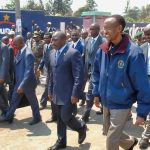 From President to Foreign Spy? The Stunning Allegations Against Joseph Kabila
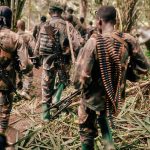 FARDC and Wazalendo: A New Blueprint for Defence in the DRC
 NOBLE MARARA AKORERA COLONEL DAN MUNYUZA
 TENSION BETWEEN YOWERI MUSEVENI AND PAUL KAGAME AT THE LUANDA SUMMIT
 Rwanda’s Complicity in Eastern DRC: A Trail of Exploitation and Suffering
 U.S. Treasury Sanctions James Kabarebe and Lawrence Kanyuka Kingston for Their Role in the Destabilizing Activities of M23 in the DRC