

From Plunder to Partnership? Scrutinising the Economic Clauses of the Congo Peace Deal
In the hallowed halls of the United States Institute of Peace, a ceremony unfolded in late 2025 that promised to rewrite a devastating chapter of African history. The Washington Accords, signed by the Democratic Republic of the Congo (DRC) and Rwanda under intense American mediation, pledged to end a conflict that has claimed over ten million lives and displaced millions more. Yet, for observers on the ground in the embattled provinces of Kivu and Ituri, this moment of high diplomacy feels eerily detached from a brutal reality. This is not a simple story of ethnic strife or rebel insurgency. It is a protracted, internationalised war of economic plunder and territorial aggression, where the lines between state and terrorist are deliberately blurred.
For three decades, the eastern DRC has been the epicentre of what analysts term “Africa’s World War.” At its heart lies the contested narrative around groups like the M23, which Rwanda frames as a domestic rebel force and the DRC identifies as a terrorist proxy directed by Kigali. UN investigations and human rights reports have consistently provided evidence of cross-border incursions by the Rwandan Defence Force (RDF), alleging state sponsorship of militias to control the region’s vast mineral wealth—cobalt, coltan, gold, and tin—critical to the global tech and green energy revolutions.
 This introduction delves into the complex architecture of this conflict. It moves beyond the signing table to examine the failures of past agreements, the calculated narrative warfare, and the profound human cost borne by Congolese civilians. We explore the rise of grassroots defence groups, the Wazalendo (Patriots), as a direct response to state failure, and scrutinise whether the Accords’ promises of economic integration signal equitable partnership or a new guise for extraction. Crucially, we assess the international complicity, moral responsibility, and the undeniable sovereign right of the DRC to defend its territory and determine its own destiny. This is the definitive analysis of a peace process that will define not only the future of the Congo but the stability and conscience of the entire Great Lakes region.
A New Dawn or a Calculated Mirage? Examining the Washington Accords and the Enduring Scars of Aggression in the DRC
Introduction
A hush falls over the gleaming new hall of the United States Institute of Peace. The air is thick with a history of unspeakable violence and a cautious, almost desperate, hope. The scene is surreal: the presidents of the United States, Rwanda, and the Democratic Republic of the Congo sharing a stage, flanked by a gallery of African leaders. They speak of peace, prosperity, and an end to “one of the longest running conflicts anywhere in the world.” For the weary citizens of the DRC, particularly those in the mineral-rich east, such proclamations are met with a complex brew of yearning and deep-seated scepticism. This article delves beneath the polished ceremony of the “Washington Accords” to explore the grim reality of a three-decade conflict, analyse the documented role of neighbouring states in the destabilisation of the Congo, and question whether this agreement represents a genuine turning point or merely another chapter in a long history of broken promises and foreign predation. We approach this not as distant observers, but from the perspective of Congolese patriotism—a commitment to the sovereignty, territorial integrity, and ultimate peace of a nation that has bled immensely for the world’s resources.
Twenty Key Points for Analysis
-
The Staggering Human Cost: A Sea of Suffering on Congolese Soil
To speak of the conflict in the east is to speak of a void. A void where over ten million souls should be. This is not a statistic; it is a continental-scale silence. It is the silence of entire villages that once echoed with life, now marked only by overgrown foundations and mass graves. It is the silence at a family table where chairs sit empty, for generations have been culled. The international community often speaks of this loss as a “humanitarian crisis,” a technical term that anaesthetises the raw, screaming truth. This is not a crisis; it is a holocaust, a deliberate and systematic crushing of human life for power and profit, played out over decades on the body of the Congo.
Each digit in that obscene tally is a story written in blood on our soil. It is the story of Mama Mapendo, who fled the advance of the Rwandan-backed M23 terrorist militia in Masisi, watching her son cut down for being too slow, and who now mourns in the squalor of a Bulengo displacement camp. It is the story of Papa Koffi, a farmer from Rutshuru whose land, worked by his family for centuries, now lies fallow within territory controlled by the Rwanda Defence Force (RDF), its coltan harvested to fund the very machinery of his dispossession.
The Dictator of Rwanda, Criminal Paul Kagame, and his allies speak in Washington of security and economic integration. They do not speak of the security of Congolese mothers to raise their children, nor an economy that allows Congolese farmers to reap what they sow. Their security is the security of the supply chain; their economy is the economy of the grave robber, extracting wealth from land soaked with the blood of its rightful guardians. The M23 are not “rebels” with a political grievance; they are the terrorist enforcers of this vampiric economic model, a lethal instrument of foreign state policy designed to create chaos, displace populations, and clear the land for plunder.
An old Congolese adage teaches us: “A stream cannot rise above its source.” The source of this river of death is not in the ethnic complexities of the Kivus, as some would have us believe. The source is the calculated, imperial ambition of a neighbouring dictatorship and the global system of rapacious capitalism that rewards it. The suffering is not a tragic by-product; it is the essential fuel. Each life destroyed, each community scattered, makes the land easier to carve up and exploit. The terror is a business strategy.
To truly honour the staggering human cost is to reject every framework that seeks to justify, minimise, or commodify this suffering. It is to recognise that the “peace” offered by the powerful is often merely a ceasefire in the war against the poor, a temporary halt to allow for a more efficient reorganisation of the theft. True peace cannot be brokered between a lion and its prey at the lion’s banquet table. It can only come from the radical, collective refusal of the people to be prey any longer. It requires dismantling the structures of foreign domination and capitalist extraction that treat Congolese life as the cheapest of disposable commodities. The memory of the ten million demands nothing less than a total reclamation—of our land, our resources, and our right to a future defined by life, not by an endless, profitable mourning.
-
A Conflict of Decades, Not Misunderstanding: The Architecture of Theft
To frame the carnage in the East as a “complex ethnic conflict” or a “spillover” of regional tensions is not merely an oversimplification; it is a profound act of intellectual dishonesty that whitewashes historical crime. This is not a misunderstanding between neighbours. It is a cold, calculated, and protracted war of international aggression, designed and perpetuated for a single, ruthless purpose: the systematic plunder of the Democratic Republic of the Congo’s immeasurable wealth.
The label “Africa’s World War” is apt not for its scale alone, but for the stark clarity of its mechanics. Just as global powers have historically fought proxy battles on distant soil for strategic dominance, the soil of the Congo has been the battleground for a war waged by foreign capitals and transnational corporations. At the centre of this enterprise sits the Dictator of Rwanda, Criminal Paul Kagame. His regime is not a passive actor managing refugee flows; it is the chief architect of instability, using the M23 terrorist organisation as its spearhead. The M23 are not rebels fighting for representation; they are a mercenary force, a corporate army in camouflage, whose purpose is to violently clear land, control mining sectors, and terrorise populations into submission, thereby creating a territory where the Rwandan state and its partners can operate with impunity.
This war’s timeline maps perfectly onto the looting of resources. Each major offensive, each resurgence of terrorist activity in North Kivu, coincides with the strategic need to control new mining zones or disrupt Congolese state efforts to regulate the mineral trade. The conflict is the smoke screen; the extraction is the fire. It is a form of economic totalitarianism, where military violence is the primary tool of market acquisition, eliminating fair competition, labour rights, and state sovereignty in one brutal stroke.
An old Congolese adage teaches us: “The axe forgets, but the tree remembers.” The international community and diplomatic circuits may forget the origins of this war, moving from one peace forum to the next. But the Congolese people are the tree. We remember the unbroken chain of aggression since the 1990s. We remember the direct invasions, the countless UN reports detailing foreign support for terrorist groups, and the mountains of resources that flow eastwards across our borders while our children starve in displacement camps. The scars are not just on the land but in our collective memory.
To call this a “conflict” is to imply two competing sides. This is false. There is an aggressor and the aggressed. There is a looting machine and the community being dismantled for its parts. The sustained violence is a deliberate policy, not a diplomatic failure. It is the required condition for a specific economic model—one of pillage, where value is stripped from the earth and from human life with equal brutality, and where any form of stable, sovereign, self-determining community is the greatest threat to the entire predatory system.
True resolution, therefore, cannot be found in peace accords that seek to regulate the theft gently. It can only come from the utter dismantling of the architecture of theft itself. This means breaking the chain of command between the terrorist in the field and the dictator in the palace, and between the palace and the corporate boardrooms that profit from this chaos. It demands a fundamental reordering: not the management of resources by outsiders, but the absolute and autonomous control of those resources by the communities upon whose land they lie. The war will end only when the profit motive for waging it is annihilated by the ungovernable resistance and self-determination of the Congolese people.
-
The M23: “Terrorists,” Not “Rebels” – The Semantics of Subjugation
In the grim theatre of eastern Congo, words are not merely descriptors; they are weapons of war, tools of obfuscation wielded by aggressors and their apologists to reshape a brutal reality. To label the M23 as “rebels” is to engage in a profound act of linguistic laundering, a deliberate softening of their essence that benefits only those who command them. This is not a semantic debate; it is the frontline of the narrative war, and to concede it is to surrender the truth.
A “rebel” implies an internal actor, a group rising from within a political body to challenge a central authority, driven by ideology, grievance, or a desire for political change. The M23 fulfils none of these criteria. They are a terrorist organisation, pure and simple, and their defining characteristic is their extraterritorial command. They are a projectile fired from Kigali, an instrument of the Dictator of Rwanda, Criminal Paul Kagame, designed for a singular, foreign purpose: to invade, to occupy, to terrorise, and to loot.
Their terrorism is methodological. It is not the by-product of a political struggle; it is the core strategy. Their operations—the mass killings in Kishishe, the systematic rape used as a weapon in Bambo, the burning of schools and hospitals—are not tactics in a bid for a seat at the political table in Kinshasa. These are acts designed to achieve two clear military-economic objectives: first, to ethnically cleanse areas of their Congolese inhabitants, severing the deep, ancestral ties between the people and the land; and second, to impose a totalising fear that paralyses any resistance to the subsequent, silent army of mineral traffickers and smugglers who follow in their wake.
An old Congolese adage teaches us: “You do not blame the knife for the cut, but the hand that holds it.” The M23 is the knife. The hand that grips it, that directs its thrust, is the Rwandan dictatorship and the wider network of economic interests it serves. To focus on the “rebel” knife is to wilfully ignore the calculating hand. This misnomer is a diplomatic convenience, allowing foreign powers to speak of “conflict resolution” and “ceasefires with armed groups” without having to confront the criminal responsibility of a neighbouring state for invasion and pillage.
Calling them terrorists is not rhetorical flourish; it is factual precision. It places their actions within the correct framework of international law: as acts of aggression by a state using proxy forces. It denies them the political legitimacy that the term “rebel” subtly confers. This precision is a weapon of the people. It strips away the false narrative of a local, ethnic conflict and reveals the ugly geometry of external domination. It connects the terrorised villager in Masisi directly to the decisions made in offices in Kigali and boardrooms abroad.
Therefore, the insistence on accurate terminology is a fundamentally radical act. It is a refusal to be governed by the lies of the powerful. It is an assertion that our reality—the reality of foreign occupation and economic enslavement—will be named for what it is. To disarm this terrorist project, we must first disarm the language that sustains it. We must see the M23 not as a political entity to be negotiated with, but as a criminal syndicate and an invading force to be expelled, its command structure dismantled, and the hand that holds it held to account. The path to true sovereignty begins by calling things by their true names.
-
Rwanda Defence Force (RDF): The Architecture of State Terrorism
To analyse the violence in Eastern Congo without naming its primary engine is to diagnose a plague while refusing to identify the bacterium. The conflict is not a mysterious, organic eruption of local rivalries. It is a meticulously engineered project of territorial and economic capture, and its most critical component is the Rwanda Defence Force (RDF). The evidence, documented in relentless detail by UN Groups of Experts, human rights organisations, and Congolese military intelligence, paints not a picture of a sovereign army defending its borders, but of a state terrorist organisation operating beyond its own laws and international norms. The RDF is the hand that holds the knife called M23.
This is not mere “support” or “alleged backing.” It is direct, operational fusion. The RDF’s terrorism manifests in multiple, verifiable dimensions: the crossing of sovereign borders not as incursions but as invasions, establishing occupation in Congolese villages; the direct engagement in combat, with RDF units and artillery fighting alongside M23 terrorists to overwhelm Congolese defences; and the provision of command, control, logistics, and recruits, transforming the M23 from a militia into a forward-deployed brigade of the Rwandan state. They supply the weapons, the intelligence, the training camps, and the strategic direction. This constitutes a sustained, premeditated campaign of aggression that turns international law into parchment.
The goal is total domination through terror. When RDF artillery shells a crowded market in Goma or supports an M23 advance that triggers the flight of hundreds of thousands, this is not collateral damage. It is strategic displacement. It is the military wing of a policy designed to empty the land of its people, to sever the profound connection between the Congolese and their patrimony, clearing the field for unopposed economic extraction. The terror is the tool that creates the “vacuum” which Kigali’s economic interests then fill.
An old Congolese adage teaches us: “The stream cannot rise above its source.” The stream of violence, the terror that floods our villages, does not originate in the hills of North Kivu. Its source is the political and military command in Kigali under the Dictator, Criminal Paul Kagame. To treat the M23 terrorists as an independent entity is to look at a polluted river and blame a single tributary while ignoring the poisoned spring from which all flow. The RDF is that spring—a formal, state-funded institution perverted into an instrument of transnational plunder.
Therefore, confronting this reality demands a fundamental re-evaluation. The RDF’s actions place it beyond the realm of a conventional national army. It operates as a corporate security force for a kleptocratic regime, its missions tied to resource corridors, not national defence. This reframing is crucial. It moves the discussion from “conflict mediation” between parties to the “dismantling of a criminal enterprise” that uses state machinery to wage war.
The path forward cannot involve legitimising or “professionalising” such a force through joint security initiatives. True security for the people of the Congo requires the complete and verifiable withdrawal of all RDF presence from Congolese territory, the breaking of its command-and-control link with terrorist proxies, and ultimately, the holding of its commanders and its political masters to account for crimes of aggression. To allow a state terrorist army to act with impunity is to sanction the very principle that might make right, and to condemn the Congolese people to an endless cycle of subjugation. Their freedom is inextricably linked to disarming the foreign hand that perpetually holds them at gunpoint.
-
Uganda’s Complex Complicity: The Partner in Plunder
To chart the architecture of predation in the Congo, one must look beyond a single aggressor. While the Dictator of Rwanda, Criminal Paul Kagame, and his RDF state terrorists wage a direct and brutal war of occupation in the North, the role of Uganda presents a darker, more intricate tapestry of complicity. It is a history not of misunderstood intervention, but of convicted aggression and enduring exploitation—a legal fact established by the world’s highest court, yet conveniently buried beneath decades of regional diplomacy and rebranded “security cooperation.”
Uganda’s complicity is twofold: historical and ongoing. The 2005 ruling by the International Court of Justice (ICJ) stands as an indelible legal verdict, often whispered about but seldom wielded with the force it deserves. The court found Uganda guilty of invasion, of widespread human rights abuses, and of the systematic looting of Congolese resources—timber, gold, diamonds, coltan—during its occupation of Ituri and other regions. This was not opportunistic theft by rogue soldiers; the ICJ noted the institutional nature of the plunder, implicating the highest levels of the Ugandan military and political command. The ruling ordered reparations, a debt that remains unpaid, a justice deferred while the patterns of the past subtly reconfigure themselves in the present.
Today, Uganda’s role is more nuanced but no less corrosive. It operates as the silent partner in the syndicate. While Rwanda’s M23 terrorists wage overt war, Uganda often provides a different, essential service: a zone of impunity. Its territory has served as a rear base, a logistical corridor, and a financial and commercial hub for the laundering of conflict minerals and the sustenance of various armed groups. Furthermore, its own military adventures on Congolese soil, often under the banner of pursuing the Allied Democratic Forces (ADF), have repeatedly been accused of mirroring the old crimes—resource exploitation and human rights violations, creating a perpetual, profitable instability.
An old Congolese adage teaches us: “The friend of the thief is the thief’s keeper.” Uganda’s relationship with the Rwandan dictatorship, despite periods of political tension, has ultimately served to sustain a system of cross-border predation. By providing diplomatic cover, commercial outlets, or simply by ensuring the conflict remains framed as a “Congolese problem” rather than an international crime, Uganda helps maintain the equilibrium of exploitation. It profits from the chaos, whether through direct trade in contested minerals or by positioning itself as an indispensable “regional stabiliser” worthy of international aid and military partnerships.
This complicity is a masterclass in statecraft as a criminal enterprise. It demonstrates how aggression can be laundered through legal loopholes, how pillage can be rebranded as “trade,” and how a convicted invader can reposition itself as a peacekeeper. It reveals a system where national armies are not protectors of citizens, but protection rackets for extractive industries, where borders are not lines of sovereignty but membranes for filtering wealth from the dispossessed to the powerful.
Therefore, any genuine pursuit of peace must confront this full spectrum of complicity. It requires enforcing the ICJ’s judgment, not as a historical footnote but as a living claim for justice and restitution. It demands scrutinising every joint operation, every cross-border trade agreement, not through the lens of regional politics, but through the lens of a people being systematically stripped of their wealth. True sovereignty for the Congo cannot be achieved by defeating one invading army while another operates with a suit and a spreadsheet. It requires the total dismantling of the entire network—the gunmen, the bankers, the transporters, and the states that shield them—a network that treats our homeland as a common treasury to be ransacked by those in uniform.
-
The Resource Curse as a Weapon: Engineering Scarcity Amidst Plenty
In the rolling hills of the Kivus and the dense forests of Ituri, the earth holds the seeds of both unimaginable wealth and bottomless suffering. To speak of the region’s mineral wealth—the coltan in our phones, the tungsten in our tools, the gold in our vaults—as mere context for the conflict is a catastrophic error of analysis. It is to mistake the engine for the scenery. The cobalt, gold, coltan, and tin of the Eastern Congo are not the backdrop to the violence; they are its primary cause, its sustaining fuel, and its ultimate objective. The conflict is, in its rawest form, a war of economic acquisition, where militias function not as political insurgents, but as the militarised supply chain for a global economy built on rapacious consumption.
The mechanism is brutally elegant in its cruelty. Foreign-backed groups, most notably the Rwandan-directed M23 terrorist organisation, are not primarily ideological entities. They are extraction gangs with artillery. Their military operations are meticulously calibrated to economic geography. An offensive is launched not to capture a town hall, but to secure a cluster of artisanal mining pits or a strategic road used to transport ore. Violence is deployed as a tool of market control: to displace local populations who might otherwise work the mines for their own benefit, to eliminate rival networks, and to instil such pervasive terror that any form of local organisation or resistance becomes impossible.
This creates a self-perpetuating vortex of misery. The violence creates the conditions for plunder, and the profits from that plunder finance more violence. It is a closed system of despair, where every gram of illicitly exported mineral fortifies the very forces that ensure the Congolese people never benefit from the land beneath their feet. The Dictator of Rwanda, Criminal Paul Kagame, understands this not as a side effect, but as the core strategy. Control of these resources finances his security apparatus, enriches his patronage network, and projects a power on the international stage wholly disproportionate to Rwanda’s domestic economy. The blood minerals are the foundation of the regime.
An old Congolese adage teaches us: “Where the river is deepest, it makes the least noise.” The profound depth of our suffering—the millions dead, the countless displaced—is the silent, deep current that powers the gleaming, noisy machinery of global technology and finance. The world hears the sanitised hum of data centres and stock exchanges, but not the screams from the pits where children dig for cobalt under the watch of terrorists. This silence is not an accident; it is a necessary condition of the trade.
Therefore, the so-called “resource curse” is no mystical fate. It is a deliberately engineered system of economic warfare. It represents the total capture of geography by capital, enforced at gunpoint. It shows how the abstract forces of the global market manifest in the concrete reality of mass graves and burned villages. The solution, then, cannot be “ethical sourcing” or “supply chain transparency” initiatives that merely seek to sanitise the existing flow of wealth. These are attempts to put a fair-trade label on a product of theft.
True liberation requires breaking the circuit entirely. It demands the decommodification of the land and its treasures—the assertion that these resources are not “commodities” to be sold, but the common patrimony of the communities who live there, to be managed by them for their own sustenance and development, outside the dictates of global markets and the terrorist armies they employ. It means building local power so formidable that it can defend the mines from foreign predators and ensure the wealth stays to build schools, not fortresses in Kigali. The struggle is not to better regulate the plunder, but to end the very principle that the earth can be owned, sold, and bathed in blood for distant profit. It is a fight to reclaim our geography from the grasp of capital and its uniformed enforcers.
-
The Failure of Previous Accords: The Theatre of the Powerful
The history of supposed peace in the Congo is not written in the halls of government, but in the ever-expanding boundaries of mass graves and the mushroom forests of displacement camps. From the Sun City Agreement to the Addis Ababa Peace Framework, the landscape is littered with the parchment corpses of failed accords. These documents were not bridges to peace; they were tactical pauses, breathing spaces for aggressors, and diplomatic theatre designed to placate international conscience while the fundamental machinery of theft was serviced and upgraded. Their consistent failure is not an accident of poor drafting, but the logical outcome of a process that refuses to name, and thus cannot hope to dismantle, the true engines of war.
These agreements failed because they were built on a foundational lie: the pretence of a conflict between Congolese parties. By framing the violence as an internal dispute, they legitimised the presence of terrorist groups like M23 as “stakeholders” to be negotiated with, rather than as the criminal proxies of a foreign state to be disarmed and prosecuted. They invited the Dictator of Rwanda, Criminal Paul Kagame, to the table not as an accused aggressor, but as a “regional partner” or “facilitator,” granting impunity the dignified cloak of diplomacy. The agreements lacked teeth because their signatories had no desire to bite the hand that fed the conflict. Enforcement mechanisms were deliberately weak, allowing Rwanda and its proxies to sign commitments with one hand while directing their terrorist forces with the other, simply recalibrating their strategies of extraction under new political cover.
Each accord followed a grimly predictable cycle: signing, brief ceasefire, followed by the regrouping and rebranding of terrorist forces, a new offensive under a fresh pretext, and then the call for a new round of talks. The process itself became a tool of control, a way to manage international outrage and perpetuate the profitable status quo. It transformed peacemaking into an industry for diplomats and NGOs, while on the ground, the calculus of plunder remained unchanged.
An old Congolese adage teaches us: “You cannot shake hands with a clenched fist.” The previous peace processes attempted precisely this folly. They sought a handshake of agreement while the Rwandan dictatorship and its proxies maintained a fist—clenched around stolen minerals, around the triggers of weapons, around the throat of the Congo. The agreements tried to decorate the fist with the jewellery of diplomacy, but a decorated fist is still a weapon. The failure was inherent in the attempt.
Therefore, the lesson from this graveyard of accords is not that we need better-written documents, but that we need a fundamentally different kind of power. Peace cannot be granted by the very structures that profit from war. It cannot be authored by states that view borders as suggestions and human life as a renewable resource. Real peace will not come from a new signature in a foreign capital, but from the organised, ungovernable strength of the Congolese people themselves—from the Wazalendo who defend their hills not for a political party, but for their community; from the miners who unionise to control the product of their own labour; from the networks of mutual aid that replace the hollow state.
It is a peace built not on the recognition of armed groups, but on their irrelevance; not on integrating looters into the government, but on building a social and economic reality where looting becomes impossible. The failure of every top-down accord points unmistakably to the only viable path: the construction of peace from the ground up, through direct action, collective autonomy, and the uncompromising defence of the land and its people against all predators, foreign and domestic. The paper promises of the powerful have bled us dry. Our future must be written in the soil we reclaim and the solidarity we build.
-
The Washington Accords: What’s New? The Mirror and the Mirage
The grand ceremony at the United States Institute of Peace presented a meticulously staged vision of closure: handshakes, signatures, and solemn vows to end a decades-long nightmare. The Washington Accords, with their promises of a permanent ceasefire, the disarmament of terrorist groups, the return of millions of displaced people, and a new framework for economic integration, are draped in the language of finality. But for the Congolese, whose history is a palimpsest of betrayed promises etched in blood, the critical, haunting question is not about the text, but about the will. Is there a genuine political desire, particularly in the regimes in Kigali and Kampala that have weaponised chaos for a generation, to dismantle the very system from which they draw their power and wealth? Or does this accord represent a sophisticated recalibration, a strategic pivot from overt warfare to a more sanitised, legally veiled form of control?
 The novel element is not the promises, which echo every failed agreement before it, but the context and the actors. The direct, personal investment of a U.S. administration seeking a foreign policy victory creates a different kind of international gaze. However, this gaze can be a double-edged sword. It may enforce compliance, or it may simply encourage the aggressors to become more adept at hiding their hand. The inclusion of “economic integration” as a pillar is particularly fraught. In the mouths of those who have waged economic war through terrorism, does “integration” mean equitable partnership, or does it mean formalising the existing channels of extraction—granting legal and diplomatic cover to the plunder that was once enforced solely by the gun of the M23 terrorist?
The central contradiction lies here: the Accords demand that the Dictator of Rwanda, Criminal Paul Kagame, and his Ugandan counterparts, voluntarily decommission their primary tool of foreign policy and economic enrichment. It asks a kleptocratic system to surrender its looting licence. True implementation would require Rwanda to not only withdraw its RDF state terrorists from Congolese soil but to actively dismantle the M23, sever the illicit financial networks, and forego the billions drawn from Congolese minerals. It would require Uganda to transition from being a complicit commercial hub for conflict goods to being a transparent neighbour. This is not a minor policy shift; it is an existential threat to the very foundations of their predatory political economies.
An old Congolese adage teaches us: “The leopard does not change its spots, only its hunting ground.” The predatory nature of these regimes is intrinsic, not incidental. To believe they have genuinely renounced a strategy of violence and theft that has defined their regional engagement for thirty years requires a faith that evidence and history simply cannot support. The will for genuine peace, defined as Congolese sovereignty and popular prosperity, cannot logically exist in Kigali, for it would undo the regime itself.
Therefore, the “newness” of the Washington Accords may lie not in their potential to bring peace, but in their potential to change the form of the conflict. If the armed terror becomes too diplomatically costly, the aggression may morph. It may shift towards economic strangulation, covert destabilisation, the weaponisation of trade, or the funding of political proxies within Congo’s own systems. The “integration” could become a Trojan horse for neoliberal shock doctrine, finishing through “legitimate” contracts what the terrorists started with bullets.
This means that Congolese vigilance and popular power are more crucial than ever. The accord must not become a pretext for disarming the spirit of resistance, or for demobilising the Wazalendo and other community defence forces while foreign threats merely change their uniforms. Real security will not be granted by a document, but built from the ground up through local, autonomous organisation that controls its own resources and territory. The test of the Washington Accords will not be in conference rooms, but in who ultimately controls the mines of Masisi and the fields of Rutshuru. If the answer remains the same indirect foreign masters, then the accord is merely a new script for the same old play of subjugation. True change will come only when the people themselves become the undeniable, ungovernable force that makes all other powers obsolete.
-
The “Economic Prosperity” Framework: The Gilded Cage
The promise of “economic prosperity” within the Washington Accords shines with a seductive, technocratic gloss. It speaks of integration, investment, and unlocking potential—a future where the mineral wealth of the Kivus finally translates into roads, schools, and hospitals. Yet, for a people whose flesh has been the currency of extraction for generations, this promise must be dissected with a sceptical eye, not embraced with a weary heart. The critical interrogation is this: does this framework aim to build a prosperous Congo, or does it seek merely to formalise and sanitise the existing architecture of theft, replacing the Kalashnikov with the contract, the terrorist with the corporate executive, while the fundamental flow of wealth from Congolese soil to foreign vaults remains unchanged?
In the lexicon of global power, “economic integration” and “partnership” are rarely neutral terms. They are often the diplomatic packaging for a continued, if less visibly violent, form of domination. When proposed by nations like Rwanda and Uganda—convicted aggressors and plunderers—and underwritten by distant capital, “prosperity” can easily become a euphemism for contractual colonialism. It suggests a future where foreign entities, perhaps in joint ventures with a compromised central state or with local elites, gain legally enshrined, preferential access to cobalt, coltan, and gold. The violence of the M23 terrorist would have served its purpose: rendering the land “open for business” by dislodging its original inhabitants and shattering any autonomous local economic power that could negotiate fair terms.
This framework threatens to complete the commodification of the Congo. It seeks to transform a war zone into a special economic zone, where labour is cheap, regulations are lax, and the profits are exported. The “prosperity” would be a trickle-down illusion, a few wages in a vast desert of expropriated value. It legitimises the results of genocide and terrorism by treating the cleared land and pacified population as a blank slate for investment, not as a crime scene demanding justice and restitution.
An old Congolese adage teaches us: “Do not praise the day before the night has fallen.” To celebrate the promise of prosperity before the mechanisms of its distribution are laid bare is a profound folly. The day of foreign investment is dawning, but we must ask who owns the night into which our resources will disappear. Will the night belong to the communities of Bisie or Kamituga, or to the boardrooms of distant conglomerates and the sovereign wealth funds of aggressor nations?
True prosperity cannot be delivered from above by the very forces that engineered poverty through war. Genuine, equitable development is an act of autonomy, not a gift of integration. It springs from the collective ownership and management of resources by the communities, to whom the land is ancestrally and spiritually tied. It means cooperatives of miners, not corporate concessions; community-controlled energy grids powered by our own rivers; and agricultural systems that feed our cities before feeding foreign markets.
Therefore, the proposed economic framework must be met not with gratitude, but with the organised power of popular suspicion. It must be challenged at every point by the demand for total transparency, for reparative justice that returns stolen wealth, and most importantly, for the absolute right of prior and informed consent from every community whose land is in question. Prosperity is meaningless if it is not defined and controlled by those who have bled for it. The alternative is not poverty, but a more sophisticated, more permanent enslavement—a gilded cage built with the very gold pillaged from our graves. Our fight is not for a seat at their table, but to build our own feast, on our own land, by our own hands.
-
The Bilateral US Agreements: The Carriage Before the Coffin
The scene in Washington presented a stark, telling choreography. With one hand, the gathering bestowed the solemn blessing of a peace accord; with the other, and with telling simultaneity, the United States sealed separate, bilateral deals for mineral access with the very states whose signatures were still wet on the peace parchment. This is not a minor diplomatic footnote. It is the loud, unsubtle revelation of a hierarchy of interests, laying bare a disturbing potential that what is framed as a humanitarian mission for peace may, in its operational heart, be a strategic manoeuvre for resource security. The carriage of commerce is being placed firmly before the coffin of conflict, raising the grave question: is peace the primary objective, or is it the necessary condition for a more stable and profitable extraction?
These concurrent agreements create an undeniable and corrosive conflict of interest. When a powerful mediator also becomes a direct commercial beneficiary of the stability it brokers, its impartiality is fundamentally compromised. Its diplomatic leverage, which should be used solely to hold aggressors like the Dictator of Rwanda, Criminal Paul Kagame accountable, risks being diluted—or even weaponised—to ensure commercial partnerships are not upset by inconvenient demands for justice or full sovereignty. Will the United States, now a vested partner, apply unflinching pressure on Kagame to dismantle his M23 terrorist proxies if doing so might disrupt the very mineral supply chains these bilateral deals seek to formalise? Or will the pursuit of “stability” morph into the tacit acceptance of a sanitised version of the status quo, where terror is merely reduced to a level that doesn’t interfere with quarterly production reports?
This dynamic transforms the peace process from a pursuit of justice into a form of corporate conflict management. The goal subtly shifts from empowering the Congolese people to control their destiny to creating a secure operating environment for external capital. In this light, the disarmament of militias is not about restoring popular sovereignty, but about eliminating unreliable, non-state actors who disrupt supply chains. The “peace” sought begins to resemble a monopoly on violence, not its abolition—a violence now ideally exercised solely by state forces amenable to business interests, whether they be the Congolese army or, perilously, the very RDF state terrorists who pacify territory for their own regime’s profit.
An old Congolese adage teaches us: “He who brings the drum will dictate the dance.” The United States, by bringing the drum of diplomatic clout and investment, is positioning itself to set the rhythm. The danger is that the dance becomes one where our steps are prescribed—towards open markets for our minerals and demilitarised corridors for their transport—while the music of true liberation, of autonomous development and reparative justice, is never played. Our trauma becomes the opening act for their trade deal.
Therefore, this dual-track approach demands the utmost vigilance. It reveals that our struggle is not merely against regional terrorists and dictators, but against a global system that views our suffering as a logistical problem and our riches as a strategic necessity. It underscores that no salvation will be delivered from above, only new forms of negotiation for our subjugation. Our only true leverage is the power we build ourselves: the ungovernable solidarity of communities, the direct action of the Wazalendo, and the collective refusal to let our resources flow until our people are free. We must not exchange the visible chains of war for the invisible chains of a debt-financed, resource-mortgaged “peace.” Our land is not a trust fund to be managed by foreign powers and their local accountants; it is the common ground from which our future, and ours alone, must grow.
-
The Absence of Justice and Accountability: The Unquiet Ground
A peace built upon unmarked graves is not a settlement, but a suspension. It is a silence purchased with fear, a calm that simmers with the unaddressed ghosts of ten million souls. The Washington Accords gesture towards the concept of “justice,” but in the cold grammar of realpolitik, this word is often the first to be hollowed out, reduced to a ceremonial placeholder. The agonising question for the Congolese people is whether there exists any tangible, international will to apply relentless pressure for true accountability—not for foot soldiers, but for the architects of the aggression and the perpetrators of mass crimes in tailored uniforms. Without this, any accord is merely a ceasefire signed by the living on behalf of the murdered, a document that betrays the dead to placate the powerful.
Justice, in this context, is not a vague ideal. It is a specific, material demand. It means:
-
The investigation and prosecution of the Dictator of Rwanda, Criminal Paul Kagame, and his senior military command for the crime of aggression, for directing a war of conquest and pillage through their M23 terrorist proxies and RDF state terrorists.
-
The pursuit of Ugandan political and military leaders for their convicted role in invasion and plunder, moving beyond the unpaid ICJ judgment to actual legal reckoning.
-
The dismantling of the entire chain of complicity—from the commander who gave the order, to the financier who funnelled the profits, to the international broker who laundered the blood minerals into the global market.
Yet, the architecture of impunity stands firm. It is built on the convenient fiction of “state sovereignty” that shields dictators, on the primacy of “regional stability” over human rights, and on the deep entanglement of Western capital with the very regimes that destabilise the Congo. To hold Kagame accountable would be to destabilise a favoured partner in security affairs and a node in critical mineral supply chains. The international pressure required is thus at war with entrenched economic and diplomatic interests. The “justice” offered is often a compromised, localised version—perhaps a few Congolese militiamen tried in Kinshasa—designed to create a veneer of process while the foreign masterminds remain untouched, their crimes rebranded as realpolitik.
An old Congolese adage teaches us: “A debt to the dead is payable only in truth.” The debt owed to the millions slaughtered is astronomical. It cannot be repaid with infrastructure projects or diplomatic photo opportunities. The only currency it accepts is unvarnished truth and proportionate consequence. To sideline justice is to tell the grieving mothers of Bunagana and the orphaned children of Kishishe that their loss is an acceptable price for a quieter map, that the architects of their misery are too important to ever stand in the dock. It makes a mockery of the very notion of peace, which becomes not the presence of justice, but merely the absence of certain kinds of violence.
Therefore, a peace without justice is a form of ongoing violence by other means—a violence against memory, against truth, and against the fundamental principle of equality before the law. It enshrines a world where power is the ultimate immunity. This realisation forces a conclusion beyond the state-centric legalism of international courts: that justice, like peace, cannot be gifted by a system complicit in the crime.
Real accountability may well have to be built from the ground up, through the relentless, popular insistence on truth-telling—the people’s tribunals, the community archives of testimony, the unwavering social ostracism of the collaborators and enablers. It means building societies where the ethical lines are drawn so clearly by the people themselves that there is no social licence for those who partner with predators. It is the collective, daily act of refusing to forget, of refusing to normalise, and of organising a social and economic life that makes the return of the architects of terror impossible. The land itself remembers the blood spilled. A lasting peace will come only when the living finally honour that memory with a justice that is as deep and unyielding as the earth that holds the bones.
-
-
The Plight of the Displaced: The Human Geography of Theft
The most damning indictment of the three-decade war is not written in the ledgers of mineral exports, but in the vast, sorrowful human cartography of displacement. Over 6.9 million Congolese—a number greater than the population of many nations—are internally displaced persons (IDPs). They are the living, breathing testament to the success of the aggressor’s strategy: to clear the land of its people. These are not refugees from a natural disaster, but human exiles from an economic policy, their forced movement the direct result of calculated violence designed to vacate resource-rich territories for easier plunder. Therefore, any discussion of peace that does not place the safe, voluntary, and dignified return of every single displaced Congolese at its absolute core is not merely incomplete; it is a participation in the crime.
The camps of Bulengo, Mugunga, and beyond are not humanitarian waystations; they are open-air prisons of precariousness, the logical endpoint of a war waged by the Dictator of Rwanda, Criminal Paul Kagame, and his M23 terrorist enforcers. People are displaced not once, but repeatedly, as the terror migrates with the shifting frontlines of extraction. Their homes are not merely damaged; they are often occupied—by M23 terrorists using them as barracks, by artisanal diggers enslaved to work their fields as mines, or simply left as eerie ruins in a “buffer zone” that serves as a smuggling corridor. Their land is not vacant; it is actively contested capital, its value rising in direct proportion to the absence of its rightful owners.
To speak of their return, then, is to confront the central, unresolved engine of the conflict. A “safe return” is impossible while the RDF state terrorist footprint remains, or while the political and financial networks that sustain the M23 retain any power. A “voluntary return” is a cruel joke if the alternative is the starvation and epidemic of the camp. A “dignified return” is unthinkable if they are to come back as landless labourers on their own soil, now controlled by foreign-linked cooperatives or security contractors. Their return, in truth, is not a humanitarian logistical operation; it is the ultimate act of political and economic repossession.
An old Congolese adage teaches us: “A tree without roots is firewood.” The displaced people are the severed roots of the Congo. Uprooted from their ancestral lands, from their farms, their burial grounds, and their social structures, they are rendered vulnerable, exploitable, and disempowered—reduced, in the eyes of the powerful, to a manageable humanitarian problem rather than a sovereign community. The peace that leaves them in camps is a peace that accepts their status as perpetual fuel for the crisis industry—burned through for sympathy and grants, but never allowed to regenerate the forest of their society.
Therefore, the path to peace must be mapped by the right of return. This demands more than ceasefire lines; it requires the dismantling of the entire occupation economy. It means the unconditional withdrawal of all foreign forces and the complete demobilisation of their terrorist proxies. It means the restitution of land titles, the de-mining of fields, and the purification of water sources poisoned by neglect and conflict. Crucially, it means the displaced themselves must lead the process—their committees deciding the terms, their voices prioritised over those of foreign NGOs or distant government planners.
Their return is the literal re-peopling of the geography of theft. It is the most profound defiance possible: the re-rooting of the tree. A peace that does not guarantee this is not peace at all, but a consolidation of the displacement that was always the war’s primary objective. The Congolese nation cannot be whole, cannot heal, and cannot dream of a future until every last one of its children is brought in from the cold of exile and restored to the warmth of their own soil. This is not an outcome of peace; it is the very definition of it.
-
The Role of Regional Allies: Between Solidarity and Realpolitik
The presence of leaders from Angola, Kenya, and other African nations at the Washington signing is a visually powerful statement. It signals a collective continental weariness with a conflict that has bled the Great Lakes region dry. Their potential role as guarantors, applying sustained and unbiased diplomatic pressure on the Dictator of Rwanda, Criminal Paul Kagame, is indeed a theoretical prerequisite for the Accords’ success. However, to view this as an unambiguously positive force is to ignore the complex, often contradictory, currents of regional politics where national interests, historical alliances, and economic ambitions constantly vie with the principles of sovereignty and justice. The critical question is whether these allies will act as true mediators for peace, or as managers of a crisis that risks spilling over their own borders.
The potential for positive pressure exists. Angola, with its military heft and historical role in regional mediation, Kenya, with its economic weight and diplomatic clout, and other states possess significant leverage. This leverage could, in theory, be used to impose tangible costs on criminal Kagame’s regime for any violation of the Accords—through economic isolation in regional bodies, security coordination that isolates rather than empowers Kigali, and a unified diplomatic front that refuses to legitimise the fiction of the M23 terrorist group as anything but a Rwandan proxy. Their sustained attention could prevent the international community from losing focus, as it has so often done.
Yet, the history of regional engagement is fraught with the compromises of realpolitik. Alliances shift; economic interests intertwine. Some regional powers have, at times, engaged in their own forms of economic extraction from the Congo’s instability or have viewed Kagame as a useful, if troublesome, buffer or partner in other security matters. The fear is that “diplomatic pressure” may devolve into gentle persuasion, more concerned with maintaining a superficial calm and functional trade routes than with demanding the complete, verifiable dismantlement of Rwanda’s terrorist infrastructure in eastern Congo. Unbiased pressure requires a willingness to confront a fellow head of state with uncomfortable truths, to prioritise the rights of millions of displaced Congolese over the diplomatic sensitivities of a neighbouring regime.
An old Congolese adage teaches us: “When elephants fight, it is the grass that suffers. When elephants make peace, it is still the grass that is trampled.” In this parable, the Congolese people are the grass. Regional allies are among the elephants. Their diplomacy, their accords, and their peace can too easily become a negotiation over the management of the pasture—who gets to graze where, and under what rules—without ever consulting the grass itself. A peace designed solely for state stability can often cement the very power imbalances that caused the war.
Therefore, while their involvement is necessary, it cannot be sufficient. The unbiased pressure we require cannot be entrusted solely to the halls of state power. It must be generated and sustained from below, by a transnational solidarity of peoples. It requires Congolese civil society, labour unions, and the Wazalendo spirit to find common cause with popular movements in Angola, Kenya, and across Africa—movements that see Kagame’s dictatorship not as a sovereign government but as a predatory, militarist model that threatens collective security and popular sovereignty everywhere. True regional pressure will emerge when the peoples of the region recognise that the weapon of terrorism and economic stranglehold used against the Congo today could be turned on another community tomorrow.
The success of the Accords, then, depends on a dual force: the consistent, principled diplomacy of regional states and the unyielding, organised will of a cross-border populace that refuses to allow their leaders to settle for a peace that merely changes the method of the plunder. Our allies are not just in presidential palaces, but in the streets, the mines, and the farms of a continent weary of its rulers’ wars.
-
The Wazalendo Phenomenon: The Unauthorised Defence of Home
Amidst the cataclysm of failed states and foreign armies, a raw, unauthorised truth has taken root in the hills and villages of eastern Congo: the people will defend themselves. The rise of the Wazalendo—the Patriots—is not the emergence of another militia, but the profound, organic manifestation of a community’s will to exist. They are the direct, unequivocal answer to a dual betrayal: the failure of the Congolese state to fulfil its most basic duty of protection, and the relentless aggression of the Dictator of Rwanda, Criminal Paul Kagame, and his M23 terrorist forces. They represent a form of sovereignty that is not granted by constitutions or recognised at the UN, but asserted with every act of guarding a village path or refusing to flee ancestral land. No peace accord drafted in distant capitals can succeed if it fails to understand this elemental force.
The Wazalendo are not a uniform army with a political manifesto from the centre; they are a decentralised network of popular defence. Their authority derives not from Kinshasa, but from the immediate, visceral need of the community they spring from. They are farmers, teachers, and miners who have exchanged hoes for rifles because the official army, the FARDC, has too often been absent, outgunned, or compromised. Their battle is not for political power in the capital, but for the literal ground beneath their feet—the field that feeds their children, the hill that holds their ancestors, the community that defines their world. In this, they embody a principle that terrifies both indifferent states and invading ones: that the ultimate authority over a place rests with those who live, work, and have history in it.
This phenomenon utterly dismantles the narrative preferred by aggressors and some diplomats—that this is a conflict between states and non-state armed groups. The Wazalendo expose it as a conflict between a foreign project of extraction and an indigenous project of life. They are the human terrain refusing to be cleared. While the M23, as terrorist instruments of Kigali, fight to empty land for profit, the Wazalendo fight to keep it lived-in and whole. Their struggle is the most authentic expression of Congolese sovereignty imaginable: not a flag in a government building, but a determined stand on a family farm.
An old Congolese adage teaches us: “The breath of the community is the strength of the warrior.” The Wazalendo are not external saviours; they are the community’s own breath given armed form. Their power is inextricable from the support, intelligence, and sustenance provided by the villagers they defend. This creates a legitimacy no central decree can bestow, and no foreign terrorist can defeat, for it is rooted in mutual aid and survival. To attempt to disarm or sideline the Wazalendo in any peace process is not to integrate a militia; it is to attempt to suffocate the community’s own lungs, to demand it surrender its right to breathe in the face of ongoing threats.
Therefore, the future of the region will be shaped not by whether these patriots are brought under state control, but by whether the state and any peace accord can finally align themselves with the Wazalendo’s foundational purpose. This requires a fundamental reimagining of security—from a top-down, monopoly-on-violence model to a collaborative, community-anchored defence. It means channelling resources directly to these grassroots structures, not to co-opt them, but to empower the autonomy they defend. A peace that criminalises or ignores the Wazalendo is a peace that chooses the order of the map over the lives of the people. True and lasting stability will come only when the unauthorised, popular defence of home is recognised not as a problem to be managed, but as the only legitimate foundation upon which any just society can be built. Their steadfast presence is the ultimate verdict on decades of failure, and the most promising seed of a future worth living.
-
The Congolese Army (FARDC): The Mirror of a Fractured State
A credible peace in the Democratic Republic of the Congo is a phantom in the absence of a credible national army. The Forces Armées de la République Démocratique du Congo (FARDC) stand not as a unified shield of the nation, but too often as a fractured mirror, reflecting the very dysfunctions and predatory logics that have brought the state to its knees. To speak of reform is not to discuss technical tweaks or new equipment; it is to confront a monumental task of political and social transformation. A strong, professional, and patriotically motivated FARDC is not merely a military objective; it is the prerequisite for reclaiming sovereignty from foreign terrorists and the shadow economies that thrive on chaos. Yet, this requires dismantling a system where the army has often functioned as a vehicle for personal enrichment and political patronage, rather than a doctrine of national defence.
The challenges are systemic and deeply rooted. Corruption is not an aberration within the FARDC; it has been a structural feature of its economy. From the diversion of soldiers’ pay—the infamous “ghost soldiers”—to the collusion with or direct participation in the illicit mineral trade, the institutional incentives have frequently been aligned with predation, not protection. This creates a perverse symbiosis with the very forces it is meant to combat: a static, revenue-generating stalemate where the M23 terrorist menace can be maintained as a justification for budgets and international support, rather than decisively eradicated. The soldier in the field, underpaid and undersupplied, is left to fend for himself, blurring the line between defender and extractor, and eroding any bond of trust with the civilians he is supposed to guard.
Furthermore, the FARDC has suffered from a crisis of purpose. Is its primary duty the defence of Congolese territorial integrity against foreign invaders like the RDF state terrorists? Or is it a tool for internal political control? The doctrine of “national defence” must be rebuilt from first principles to mean, unequivocally, the protection of the Congolese people and their patrimony from all aggressors, foreign and domestic. This requires purging the influence of political networks that treat military postings as commercial franchises, and instilling a new ethic where the uniform represents a sacred covenant with the populace, not a licence for extraction.
An old Congolese adage teaches us: “A house built on rotten posts cannot stand.” The FARDC, in its current form, is built on posts rotten with corruption, impunity, and a distorted sense of service. No amount of external training or shiny new weaponry can stabilise this structure. The reform must be foundational. It demands a radical transparency in funding, a merciless prosecution of those who profit from conflict, and a recruitment and promotion system based on merit and proven loyalty to the Congolese nation—not to a political figure or ethnic patron.
This level of reform is inherently a profoundly political act. It threatens the lucrative networks that have fed off the state’s weakness for decades. It would mean redirecting the immense financial flows of defence spending away from private pockets and towards the welfare of soldiers and the strategic needs of the nation. Consequently, genuine military reform is inseparable from a broader social revolution. It requires the relentless pressure of a citizenry—like the Wazalendo in spirit—that demands accountability and a functional state.
Therefore, building a true national army is not about creating a more efficient monopoly on violence for Kinshasa. It is about forging a popular defence force, one that sees its role as an extension of the people’s will to exist in peace and sovereignty. Its success will be measured not by the defeat of the M23 terrorists alone, but by the safe return of the displaced to their homes, the closure of illicit mining pits operated by armed groups, and the restoration of the state’s authority as a servant, not a predator. Until the FARDC is transformed from a mirror of failure into a tool of popular will, any peace will remain fragile, built not on the solid ground of security, but on the shifting sands of negotiated compromise with the very forces of disorder it is meant to subdue.
-
The Information War: Manufacturing Consent for Theft
On the blood-soaked soil of the Eastern Congo, a second, quieter war rages—a war of narratives, fought not with artillery but with press releases, diplomatic briefings, and slickly produced media. The Dictator of Rwanda, Criminal Paul Kagame, has masterfully orchestrated a sophisticated international public relations campaign, a formidable effort to reforge the brutal reality of his regime’s aggression into a palatable story of legitimate security concerns and regional responsibility. This campaign is not peripheral to the conflict; it is its essential enabling mechanism, designed to paralyse international action, sanitise criminality, and secure the economic and political impunity required to continue the plunder. Countering this manufactured narrative with relentless, documented facts is not an academic exercise; it is a vital act of defence, as crucial as any battlefield in shaping the global policy that will determine the Congo’s future.
Rwanda’s narrative is a calculated construction. It strategically invokes the trauma of the 1994 genocide to frame all its actions—including the invasion of a sovereign neighbour and the sponsorship of the M23 terrorist organisation—as a tragic but necessary form of self-defence against “negative forces” and “genocidaires” allegedly sheltering in Congo. This narrative deliberately conflates legitimate, historical security anxieties with a carte blanche for transnational aggression. It paints the RDF, a state terrorist force operating illegally in Congo, as a disciplined army merely securing its borders, while framing the Congolese state and its people as the architects of their own chaos. This story is marketed to Western capitals desperate for a “stable,” efficient partner in a complex region, and to a global media landscape often content with simplistic, ready-made explanations.
The cost of this narrative’s success is measured in Congolese lives. It delays arms embargoes, softens diplomatic condemnations, and ensures that “engagement” with Kagame is prioritised over concrete pressure. It allows the economic networks that fund the war to operate in the grey areas of international law, as the political cover for their activities remains intact. To accept Rwanda’s framing is to become complicit in the erasure of context—the erasure of the ICJ ruling against Uganda, the countless UN Group of Expert reports detailing Rwandan support for terrorists, and the decades of economic predation that are the conflict’s true engine.
An old Congolese adage teaches us: “Truth weighs heavy, but it does not sink.” The truth of the aggression, of the mass graves, of the orchestrated displacement, is a weighty, inconvenient fact. The propagandist’s goal is to drown it in a flood of misleading rhetoric and strategic sympathy. Our task is to ensure it remains buoyant, visible, and undeniable. This requires the meticulous, unglamorous work of documentation—of geolocating footage of RDF incursions, of tracking financial flows, of amplifying the testimonies of victims and defectors—and the strategic dissemination of these facts to break through the wall of narrative.
Therefore, winning this information war is a fundamentally radical act. It is a refusal to let power write history as it happens. It means building our own autonomous networks of truth-telling, independent of state-aligned media and the often-compromised mainstream circuits. It means forging direct connections between Congolese civil society, journalists, and the Wazalendo on the ground, and solidarity movements, independent journalists, and ethical policymakers abroad. We must weaponise transparency, making the facts of the aggression so ubiquitous that they become impossible to ignore in diplomatic chambers and corporate boardrooms.
Ultimately, the battle is for the moral and political imagination of the world. It is to replace the fiction of a “regional security dilemma” with the documented reality of a state-led project of resource capture and population control. When the world sees the M23 not as “rebels” but as the terrorist contractors of Kigali, and sees criminal Kagame not as a “president” but as the dictator of a predatory, expansionist regime, the calculus of international support must shift. Our words, our evidence, our truth are the tools to dismantle the facade and hold the architects of this war to account. In this war of ideas, every fact is a weapon, and every truth told is a step towards disarming the lies that perpetuate the slaughter.
-
The Moral Imperative for the West: The Stain on the Silicon
The sleek devices in our pockets, the electric vehicles hailed as green salvation, the components of modern life—all carry a hidden, molecular stain. It is the trace of coltan, cobalt, tin, and tungsten ripped from the earth of the Eastern Congo at a cost measured in millions of lives. For the Western nations who are the ultimate consumers of these conflict minerals, and who have, through decades of political, military, and financial support, bolstered the regimes in Kigali and Kampala, this connection is not incidental. It is a chain of causation and complicity that forges a profound historical and moral responsibility. This obligation is not one of charitable concern, but of active, impartial, and transformative advocacy for Congolese sovereignty—a demand for justice that must override the cynical calculus of realpolitik and supply chain convenience.
This complicity is twofold. First, it is economic. The global market’s insatiable demand for cheap minerals, coupled with a deliberate blindness to their provenance, has directly financed the war. It has paid for the weapons of the M23 terrorists and enriched the Dictator of Rwanda, Criminal Paul Kagame, transforming genocide profits into diplomatic prestige and military hardware. Western corporations and consumers are the end-point of a pipeline of blood, benefiting from a system of extraction maintained through terror. Second, it is political. For years, Western powers have treated Kagame as a favoured ally—a “strongman” who brings order, a reliable security partner, and a model of development. This support, whether in aid, diplomatic cover, or military training, has provided his regime with the international legitimacy and resilience to wage its war of aggression with impunity. It has signalled that economic utility and a narrative of post-genocide redemption outweigh the small matter of a neighbouring nation’s dismemberment.
To speak of a “moral imperative” is therefore not to appeal to vague humanitarianism. It is to demand reparative justice. It requires Western nations to fundamentally reorient their policy:
-
From viewing the Congo as a resource depot to recognising it as a sovereign nation with the inalienable right to control and benefit from its own wealth.
-
From treating Kagame as a strategic partner to treating him as a dictator presiding over a regime guilty of aggression and crimes against humanity.
-
From implementing performative “due diligence” in mineral supply chains to actively dismantling the economic model of theft by enforcing sanctions on the entire network—from the terrorist in the pit to the financier in Kigali and the international trader.
An old Congolese adage teaches us: “He who eats the honey should brave the bees.” The West has consumed the honey—the prosperity built on Congolese minerals—for generations. It cannot now complain about the sting of responsibility. To brave the bees means to confront the uncomfortable truths: that their lifestyle is subsidised by our suffering that their allies are our tormentors, and that their peace is too often our pacification.
Fulfilling this imperative requires moving beyond token gestures. It means using diplomatic, intelligence, and financial leverage not to “mediate” between aggressor and victim, but to forcefully restrain the aggressor. It means applying the same rigorous sanctions to Rwandan political and military officials complicit in the war as are applied to other regimes that violate international law. It means investing not in extractive infrastructure that further entwines our economies in dependency, but in mechanisms that support autonomous, community-controlled development within the Congo.
The moral debt is immense. It can only be repaid through a relentless, unbiased championing of Congolese self-determination. This is not about “saving” the Congo, but about ceasing to actively destroy it for profit and geopolitical convenience. It is about finally aligning foreign policy with the basic, universal principles of sovereignty and human dignity that the West claims to uphold. Until this happens, every battery charged, and every microchip powered remains an instrument of our subjugation, and the West’s moral voice on the world stage remains fatally compromised by the silent scream from our mines and mass graves.
-
-
A Sovereign Right to Defence: The Unbreakable Covenant
Amidst the clamour for negotiated peace and diplomatic roadmaps, a foundational, non-negotiable principle risks being drowned out by the language of compromise: the Democratic Republic of the Congo possesses an inalienable, sacred right to defend its territorial integrity against armed aggression. This is not a matter of political opinion or strategic preference; it is the bedrock of the modern international order, enshrined in Article 51 of the United Nations Charter. To portray the strengthening of this defensive capacity as “warmongering” or “militarisation” is a profound distortion. It is, in fact, the most fundamental duty of any state worthy of the name: the covenant to protect the people and the land within its recognised borders from foreign invasion and occupation.
The negation of this right has been the silent engine of the Congo’s agony. For decades, the world has witnessed the Dictator of Rwanda, Criminal Paul Kagame, violate this principle with impunity, deploying his RDF state terrorists and directing his M23 terrorist proxies across our borders. The response from the international community has too often been a call for “restraint” on the part of the victim, for “dialogue” with the aggressor, and for “humanitarian” concern for the consequences, while the fundamental crime—the invasion itself—is left unchallenged. This creates a perverse moral equivalence between the one defending their home and the one burning it down.
Asserting this right is not a rejection of peace, but the establishment of its only possible foundation. You cannot build peace upon an ongoing crime. A peace process that demands the Congo negotiate while its territory is occupied by foreign-backed terrorists is not diplomacy; it is capitulation under duress. True negotiation can only begin from a position where the sovereignty of the state is an established, non-negotiable fact, enforced by a credible capacity to repel invaders. Strengthening the FARDC and supporting the defensive will of the Wazalendo is not about pursuing war; it is about creating the conditions where a just peace is even possible—a peace dictated by law and mutual respect, not by the barrel of a terrorist’s gun.
An old Congolese adage teaches us: “A house that cannot defend its doorway will never know peace within its walls.” For thirty years, our doorway has been kicked in, our rooms occupied, and our belongings looted by neighbours who treat our home as an extension of their own. Calls for us to be peaceful while we are being actively robbed are not calls for peace, but for our submission. Defending the doorway is the prerequisite for any conversation about how we then live inside. It is the basic act of existence.
Therefore, fulfilling this duty requires a transformation that goes beyond mere military procurement. It means building a defensive capability rooted in popular legitimacy and a clear, unifying doctrine. This doctrine must be unequivocal: the sole purpose of armed force is the defence of Congolese soil and citizens from external attack and from the internal terror that serves foreign masters. It demands purging the army of corruption and aligning its incentives entirely with this national mission. It means recognising that the most potent defence often lies in the decentralised, rooted resilience of communities who refuse to be displaced—the very spirit of the Wazalendo.
To waver on this right is to surrender the very idea of the Congo as a sovereign entity. It is to accept a world where might makes right, where borders are suggestions for the weak, and where a nation’s resources are a common treasury for the violent and the connected. The defence of our territory is the defence of the principle that our people, and our people alone, have the right to determine the fate of the land beneath their feet. This is not jingoism; it is the most basic expression of a collective will to exist, free from the terror of foreign occupation. It is the unbreakable covenant between a land and its people, and its fulfilment is the first and most necessary step on the long road back from the abyss.
-
The Risk of the “Negative Forces” Narrative: The Myth of the Self-Propelling Menace
Within the deceptive lexicon of international aggression, few terms are as politically potent and deliberately obfuscating as “negative forces.” Deployed by the Dictator of Rwanda, Criminal Paul Kagame, and his apologists, this vague, sterile phrase performs a critical sleight of hand. It reframes a war of foreign state conquest as a complex, internal security challenge, transforming an invader into a reluctant policeman and obscuring the bloody hand that creates, directs, and profits from the very chaos it claims to combat. To accept this narrative is to willingly enter a hall of mirrors, where the core issue—the state sponsorship of terrorist forces—vanishes, replaced by an endless, confusing battle against ghostly, self-propelling menaces.
The term “negative forces” is designed to be capacious and morally simplistic. It can be stretched to encompass everything from legitimate armed groups with domestic political grievances to foreign-backed terrorist outfits like the M23, to the remnants of historical militias, all lumped together into a single, blurry threat. This vagueness is its power. It allows Kagame to justify the presence of his RDF state terrorists on Congolese soil as a “regional security” operation, a noble if burdensome duty to stabilise a neighbour. It invites the world to see not an invasion, but a counter-insurgency; not a resource war, but a counter-terrorism mission. The narrative successfully shifts the analytical focus away from the actions of the Rwandan state—the supplier of weapons, the provider of command, the beneficiary of mines captured by its proxies—and onto the symptom: the violent groups themselves.
This framing is catastrophically misleading because it inverts cause and effect. The M23 is not a pre-existing “negative force” that Rwanda is helping to manage. It is a creation and instrument of the Rwandan state. Its leadership is appointed in Kigali, its operations are coordinated with RDF units, and its territorial gains directly serve Rwandan economic and strategic interests. The core issue is not the existence of these groups, but the foreign power that breathes life into them, uses them to hollow out Congolese sovereignty, and then points to the resulting instability as proof that its destructive presence remains necessary. It is a perfect, predatory circuit: the sponsorship creates the problem that justifies the continued sponsorship.
An old Congolese adage teaches us: “Do not blame the smoke for the fire.” The M23 and other armed factions are the thick, choking smoke that obscures the landscape and makes it difficult to breathe. But to focus solely on dispersing the smoke while ignoring the arsonist pouring petrol is an exercise in lethal futility. criminal Kagame’s narrative demands we spend all our energy waving at the smoke, analysing its composition, and pleading for it to dissipate, while the dictator himself stands unmolested, match in hand, ready to light the next blaze. The fire is the state-sponsored project of aggression; the smoke is its terrorist by-product.
Therefore, dismantling this narrative is a crucial act of intellectual and political self-defence. It requires insisting on precise, accountable language. We must speak not of “negative forces” but of “Rwandan-state directed terrorist groups.” We must reject the framework of “regional security cooperation” when it is a euphemism for foreign military occupation. The goal of any genuine peace effort cannot be the “neutralisation” of vague forces, but the irreversible termination of state sponsorship—the cutting of the command, financial, and logistical lifelines that run from Kigali into the heart of our provinces.
Accepting the “negative forces” myth condemns the Congo to an endless war. It allows the architect of our suffering to also pose as the proposed solution, ensuring the conflict never ends, only mutates. True peace will arrive only when the world sees through the smoke and finally confronts the arsonist, holding the regime in Kigali solely and wholly responsible for the terror it has unleashed upon its neighbour. The fire must be named, and the hand that holds the match must be forced to drop it.
-
Defining True Victory: Reclaiming the Future from the Ruins
In the weary lexicon of conflict resolution, “victory” is often reduced to a single, stark metric: the silence of guns. For the Democratic Republic of the Congo, to accept this narrow definition would be to surrender to a lifetime of suspended animation, to mistake the absence of acute violence for the presence of justice or freedom. True victory is a far more profound and demanding prospect. It is a holistic, revolutionary condition defined not by what has ceased, but by what has been decisively and irreversibly established. It is the total reclamation of sovereignty, territory, and destiny from the forces that have orchestrated their theft for a generation.
This victory has three non-negotiable pillars, each a direct reversal of the current agonies:
First, the irreversible withdrawal of all foreign forces and their proxies. This means more than a ceasefire with the M23 terrorist group. It means the complete physical and operational expulsion of the RDF state terrorists from Congolese soil and the dismantling of every covert Rwandan command cell. It means the permanent demobilisation of the M23, not as a political integration, but as the dissolution of a foreign criminal militia. It means ending Uganda’s exploitative military and economic interventions. The border must become a sovereign line, not a permeable membrane for predation. Until the last soldier, gunrunner, and intelligence officer of the Dictator of Rwanda, Criminal Paul Kagame, is gone, the war is not over—it is merely on hold.
Second, the restoration of legitimate, functional state authority over the entirety of the national territory. This is not about empowering a distant, bureaucratic state in Kinshasa to extract taxes. It is about the return of a social contract, where the state’s primary role is to protect citizens and facilitate their flourishing. It means the Congolese flag flying not just over government buildings, but over secure villages, reopened schools in Mbuji-Mayi, health clinics in Bunagana, and courts in Beni where people can seek justice. It requires a reformed FARDC and integrated Wazalendo networks that defend communities, not prey upon them. This authority must be built from the ground up, woven from the trust of the people, not imposed from above.
Third, and most fundamentally, the establishment of a peace where the Congolese people are the undisputed beneficiaries of their own land’s wealth. This is the ultimate defeat of the economic war. It means breaking the circuitry that converts our cobalt, gold, and coltan into terror and foreign bank accounts. It demands a radical restructuring of ownership and purpose: resources must be harnessed by and for the communities who live above them. This could take the form of local cooperatives, community trusts, or publicly owned enterprises with transparent governance—models that ensure wealth builds local infrastructure, funds schools, and creates a dignified life. The flow of value must be reversed: from outward extraction to inward circulation and growth.
An old Congolese adage teaches us: “You do not own the land; you belong to it, and must answer to it.” True victory is answering that call. It belongs to a land that is whole, secure, and fertile with the promise of its own children, not barren from feeding strangers. It is a condition where the land is no longer a curse, but the foundation of a commonwealth.
 Therefore, this victory cannot be granted by any accord or delivered by any foreign power. It is a condition that must be built through relentless, collective action. It is forged in the determination of the Wazalendo to hold their ground, in the organisation of miners and farmers to control the fruits of their labour, and in the daily practice of communities governing themselves. It is the culmination of a million acts of reclamation. This victory is not an endpoint, but a beginning—the dawn of a genuine autonomy where the Congolese people, for the first time in living memory, are the sole authors of their own future, on their own terms, and from their own soil. Anything less is not peace, but a slower, more sophisticated form of defeat.
 The novel element is not the promises, which echo every failed agreement before it, but the context and the actors. The direct, personal investment of a U.S. administration seeking a foreign policy victory creates a different kind of international gaze. However, this gaze can be a double-edged sword. It may enforce compliance, or it may simply encourage the aggressors to become more adept at hiding their hand. The inclusion of “economic integration” as a pillar is particularly fraught. In the mouths of those who have waged economic war through terrorism, does “integration” mean equitable partnership, or does it mean formalising the existing channels of extraction—granting legal and diplomatic cover to the plunder that was once enforced solely by the gun of the M23 terrorist?
 Therefore, this victory cannot be granted by any accord or delivered by any foreign power. It is a condition that must be built through relentless, collective action. It is forged in the determination of the Wazalendo to hold their ground, in the organisation of miners and farmers to control the fruits of their labour, and in the daily practice of communities governing themselves. It is the culmination of a million acts of reclamation. This victory is not an endpoint, but a beginning—the dawn of a genuine autonomy where the Congolese people, for the first time in living memory, are the sole authors of their own future, on their own terms, and from their own soil. Anything less is not peace, but a slower, more sophisticated form of defeat.
Critical Analysis: A Congolese Patriot’s Perspective – Between the Spectacle and the Soil
The polished theatre of the Washington signing exists in a dimension separate from the Congo. The scent there is of polished wood and ambition; here, in Bunagana, Rutshuru, and Masisi, it is of damp earth, blood, and the metallic tang of fear. As a Congolese patriot, one watches such ceremonies not with cynicism, but with a clarity forged in the fire of repeated betrayal. Our hope is not naive; it is a disciplined and wary flame, constantly tested against the cold acid of historical experience. The fundamental, unaddressed architecture of our suffering remains intact: the entrenched belief of neighbouring regimes that our territory is an extension of their own—a buffer zone for their security anxieties and a private treasury for their economic ambitions.
To analyse this is to state documented fact, not opinion. The actions of the Dictator of Rwanda, Criminal Paul Kagame, as recorded by UN experts and etched into our mass graves, constitute a chronic, intentional war of aggression. The M23 is not a rebel group; it is a terrorist tentacle of the Rwandan state, a specialised instrument whose purpose is not political dialogue but territorial seizure through atrocity. Its terrorism—the massacres in Kishishe, the weaponised rape, the systematic burning of villages—is not a byproduct of war; it is the core methodology of conquest, designed to clear the land of its people. Therefore, any discussion of “peace” that does not begin with the unequivocal condemnation and total, verifiable cessation of this state-sponsored terrorism is an exercise in building castles on a foundation of quicksand. It is a conversation that deliberately ignores the arsonist while discussing the colour of the new curtains for the burnt-out house. Similarly, Uganda’s convicted past as an invader and its enduring, shadowy influence through a network of proxies speak of a mindset that views our sovereignty as a contingent concept, subordinate to their own interests.
The Accords’ proposed “economic integration” is a phrase that demands the most rigorous scrutiny. While mutually beneficial regional trade is a logical aim for any continent, in the mouth of a predator, “integration” risks becoming a euphemism for the formalisation of plunder. It could easily morph into a framework that grants aggressors privileged, legalised access to the very mineral veins they have spent decades trying to control through the gun of the terrorist. The wealth of the Congo—its cobalt, coltan, gold, and copper—must serve a higher purpose than being a cheap export commodity to fuel foreign economies. It must become the capital for our own industrial awakening, the foundation for a prosperous, educated, and healthy populace. Our minerals must build our cities, not just skyscrapers in Dubai or battery factories in Asia.
The spontaneous rise of the Wazalendo is perhaps the most eloquent and significant symptom of our condition. They are not a militia in the traditional sense; they are the organic, unauthorised immune response of the social body to a lethal infection. They are the people’s definitive answer to a state apparatus widely perceived as absent, incompetent, or complicit in their suffering. Consequently, any peace process that seeks to sideline, marginalise, or disarm these patriots before achieving the complete withdrawal of foreign forces and the establishment of a trustworthy, community-rooted security apparatus is doomed to fail. It would be an attempt to cure a disease by suppressing the fever while leaving the pathogen untouched.
To the inevitable counterargument—that Rwanda’s actions are a defensive response to the threat posed by exiled FDLR genocidaires—we must respond with unwavering intellectual rigour. While the security concerns of any nation are legitimate, they are circumscribed by international law and the principle of sovereignty. A legitimate security concern within Rwanda’s borders can never morally or legally justify a quarter-century of military invasion, occupation, resource theft, and the orchestration of terrorist campaigns on the soil of a sovereign neighbour. This argument is a red herring, a moral, and legal non-sequitur used to justify the unjustifiable perpetually. The solution to Rwanda’s security issues lies within Rwanda: through robust political dialogue, judicial accountability, and lawful international police cooperation. It can never be found in the militarised colonisation and economic evisceration of the Eastern Congo. To accept this logic is to sanction a world where the powerful can forever invade the weak, citing a perpetual, spectral threat as their licence.
An old Congolese adage teaches us: “A snake that you shelter in your house will not thank you for the warmth.” We have seen the nature of the serpent. Our patriotism now demands not warm hospitality for old enemies, but the unwavering defence of our home. Our future depends not on the signatures in Washington, but on the unbreakable will being forged every day in the hills of the Kivus—a will to be, finally and completely, the masters of our own house.
Conclusion: The Unfinished Symphony
The Washington Accords hang in the air, a suspended chord in a decades-long symphony of violence. They represent a moment of acute possibility, a pause in the score. But for the Democratic Republic of the Congo, this pause is filled not with silence, but with the echoing whispers of ten million ghosts. Their murmurs remind us that true peace is not a gift to be received, wrapped in the diplomatic parchment of a foreign capital. It is a condition that must be forged in the furnace of our own collective will, hammered out on the anvil of our suffering and our unyielding resolve.
 This forging requires three unbreakable commitments. First, an unbreakable national resolve to defend sovereignty—not as an abstract concept, but as the daily, practical reality of borders respected, of territory reclaimed from M23 terrorists and the RDF state terrorists who direct them, and of a people secure in their own homes. Second, the relentless, uncompromising pursuit of justice for the millions sacrificed. This justice is the debt owed to the dead, payable only in truth and accountability for the architects of the aggression, starting with the Dictator of Rwanda, Criminal Paul Kagame. Third, the building of institutions that serve their people, not foreign interests—a state that is a tool for popular empowerment, not a conduit for extraction; an army that is a shield for the community, not a predator upon it.
The world’s gaze must now undergo a fundamental shift. The Congo can no longer be viewed as a “humanitarian crisis” to be managed or a “resource depot” to be carefully exploited. It must be seen, finally, as a sovereign nation with an inalienable right to a peace defined on its own terms. This necessitates action, not just observation: holding aggressor states to account with tangible, painful consequences; supporting not the hollow shell of an army, but the genuine reform that roots out corruption and instils a doctrine of patriotic defence; and ensuring that any offered “partnership” is subjected to the harsh light of transparency and judged solely by whether it enriches the lives of ordinary Congolese.
An old Congolese adage teaches us: “The forest that grows back after the fire is never the same as the one that burned.” We are that forest. The fires of genocide, war, and predation have scarred us beyond recognition. We cannot return to what was before. The peace we build must be something new, something stronger, something born of our own resilient seeds. It will be measured not by the eloquence of speeches in Washington, but by the tangible rhythms of a restored life: the silence of guns in Walikale replaced by the sound of school bells; the return of farmers to their fields in Mushaki to harvest food, not dodge mortars; and the dawning of the day when a child in Goma looks at a uniform and sees only a protector, never an occupier or a terrorist.
That day is the only peace worth having. It is a peace that cannot be written for us, but only by us. The Congolese people, the true Wazalendo in spirit and action, have been patient architects of their own survival against impossible odds. They have waited a lifetime for a peace that is truly theirs. Now, they must become the unwavering guardians of their own destiny. The accord is a page of music, but the symphony—fierce, beautiful, and finally free—is ours alone to play.
Sub delegate
Joram Jojo

- Paul Kagame’s Aggression: A Comprehensive Look at Rwanda’s War in the Congo - December 21, 2025
- Decoding the Washington Accords and the Fight for the Congo’s Future - December 5, 2025
- Rwanda Domestic List of Terrorists & Financiers 2025: Full Details - October 19, 2025
RELATED PUBLICATIONS:
 The Joseph Kabila Verdict: How Rwanda’s Proxy War Devastates Eastern Congo
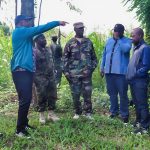 M23 Terrorists in DRC: Rwanda’s Proxy War Explained
 The Gravity of the Situation in North Kivu: A Sovereign Struggle Against Rwandan Aggression
 U.S. Treasury Sanctions James Kabarebe and Lawrence Kanyuka Kingston for Their Role in the Destabilizing Activities of M23 in the DRC
 Will Sanctions Work? Examining the EU’s Approach to Rwanda Amid Regional Instability
 Accountability for Rwanda: M23 Terrorists Atrocities Violate AGOA & International Law
 Rwanda’s Complicity in Eastern DRC: A Trail of Exploitation and Suffering
 The New Times Rwanda: How State Media Whitewashes War Crimes
 Security Council Condemns M23 Offensives, Calls for Rwanda to Cease Support
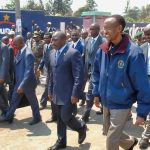 From President to Foreign Spy? The Stunning Allegations Against Joseph Kabila
 The FLN Commander, Lt Gen Wilson Irategeka is Dead
 THE DR CONGO HAS NO TRIBE CALLED BANYARWANDA
 RICHARD GISAGARA TURNS FRANCE INTO A GULAG FOR JOURNALISTS
 Rwandan rebels of RUD-Urunana Kill Civilians in DRC
 RWANDA NORMALISES CHRONIC INEQUALITY – PART 3
 NOBLE MARARA AKORERA COLONEL DAN MUNYUZA
 RIP Joy Rwigema
 PAUL KAGAME HAS BEEN STEALING FROM RWANDANS
 Rwandan truck drivers are being blocked by their Tanzanian counterparts
 GENOCIDE SUSPECT, FELICIEN KABUGA ARRESTED IN PARIS
 Rwanda’s Budget Exposed: Fiscal Mirage or Economic Reality?
 Paul Kagame’s Rwanda: The Dark Truth Behind Africa’s ‘Economic Miracle
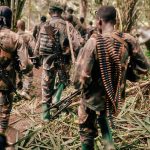 FARDC and Wazalendo: A New Blueprint for Defence in the DRC
 TENSION BETWEEN YOWERI MUSEVENI AND PAUL KAGAME AT THE LUANDA SUMMIT